Do Capacitors Expire? Shelf Life and Aging Explained
Do capacitors expire? Yes, they do. A capacitor is a two-plate part that stores charge, and the materials inside it age whether the part sits in a drawer or runs in a live circuit. Shelf life depends on the type. Electrolytics fade in a few years. Film and ceramic parts last decades.
Last updated: August 13, 2026 — rebuilt with a shelf-life table, a bench check procedure, and updated failure numbers.
So the short answer is not a flat “no.” It depends almost entirely on what is inside the can. Here is the quick version before the detail.
- Aluminum electrolytic: 2 to 10 years on the shelf. The weak link.
- Tantalum: roughly 10 to 15 years, longer if kept cool.
- Ceramic: about 20 years, often much more.
- Film (polyester, polypropylene): up to 30 years.
Why Do Capacitors Expire?
Capacitors age because their internal chemistry and geometry drift over time. An aluminum electrolytic holds a wet or gel electrolyte sealed inside a metal can, and that fluid slowly bleeds out through the rubber bung across years of heat cycling until the part can no longer hold its rated charge. Then it dries. Capacitance drops. Internal resistance climbs. The Wikipedia entry on electrolytic capacitors covers the chemistry well if you want the deep version.
Four things push the aging clock forward.
1. Heat
Heat is the number one killer. The rule of thumb from datasheets is simple: every 10°C rise roughly halves the expected life. A cap rated for 2,000 hours at 105°C might give you 8,000 hours at 85°C. This comes straight from the Arrhenius temperature model that manufacturers print in their lifetime curves. Keep parts cool and they last.
2. Voltage stress
Run a capacitor above its rated voltage and the dielectric starts to break down. Spikes and surges do the same, only faster. A 25V cap fed 30V will not last. It might survive a while, then fail short. When in doubt, derate. I usually pick a part rated 30 to 50 percent above the working voltage.
3. Build quality
Cheap caps die young. The 2000s “capacitor plague” proved it, when a bad electrolyte formula killed millions of motherboards inside two years. Good parts from Nichicon, Panasonic, or Kemet hold their numbers far longer. You get what you pay for here.
4. Environment
Humidity, salt air, and vibration all shorten life. A cap on a marine board or an outdoor unit ages faster than one in a climate-controlled rack. This ties directly into why an AC capacitor keeps blowing in hot attic units.
How Long Do Capacitors Actually Last?
There is no printed expiry date stamped on the side. Instead, each family drifts at its own pace. The table below is the practical version I keep in my head at the bench.
| Capacitor type | Typical shelf life | What kills it first |
|---|---|---|
| Aluminum electrolytic | 2 to 10 years | Electrolyte dry-out |
| Tantalum | 10 to 15 years | Surge current, heat |
| Ceramic | ~20 years | Almost nothing; cracks |
| Film | up to 30 years | Moisture ingress |

Fig. 1: The lifespan graph assuming full ripple current operation
Electrolytic capacitors
These are the ones you replace. An electrolytic uses two aluminum plates and a wet electrolyte between them. The fluid is the whole game. Seal it well and keep it cool, and the part lasts a decade. Let it cook, and you are down to 2 years or less. If you want the full breakdown, I wrote a separate piece on how long electrolytic capacitors actually last.
One more thing. Even an unused electrolytic loses its oxide layer over years of storage. That is a real effect, and I cover whether capacitors degrade if they are not used in more depth there.
Ceramic and film capacitors
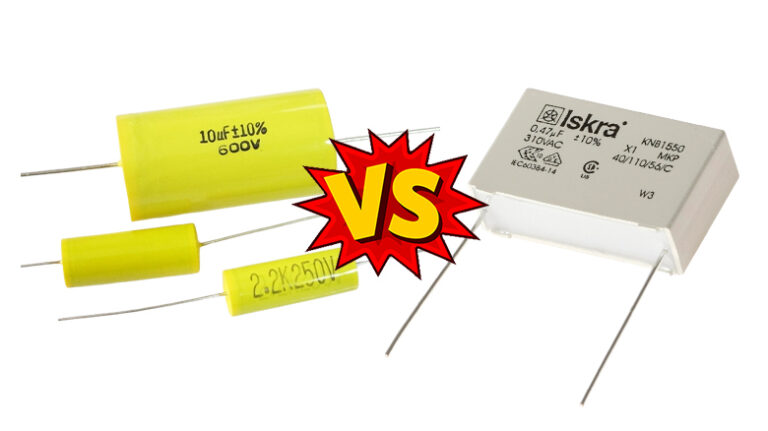
These are the survivors. Neither needs a liquid electrolyte, so there is nothing to dry out. A film cap can hold its rating for 30 years. Ceramics last about 20 and usually longer, though they can crack under mechanical or thermal shock. If you are choosing between the small solid types, my tantalum versus ceramic comparison lays out the trade-offs.
How I Check a Stored Capacitor on the Bench
When I pull an old board or open a bag of parts from 2015, I do not trust them blind. Here is my routine.
- Look. Bulged top, crusty residue, or a popped vent means it is dead. Toss it.
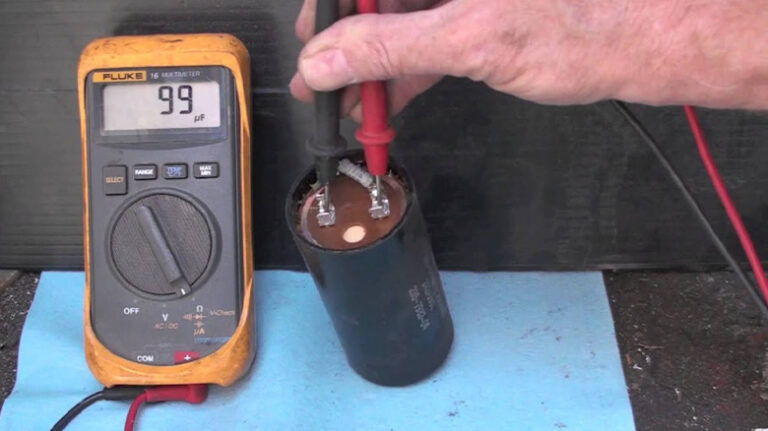
- Measure ESR. An ESR meter tells you more than a capacitance reading. A rising ESR is the early warning sign.
- Reform old electrolytics. For a big cap stored many years, I bring it up slowly through a current-limited supply over 30 to 60 minutes. This rebuilds the oxide layer.
- Recheck capacitance. If it reads more than 20 percent below the marked value, retire it.
- Dispose properly. Do not bin large caps live. Discharge them, then follow the right way to dispose of capacitors.
In practice, most bad caps announce themselves visually, so a slow walk down the board with good light finds the bulged tops and the crusty vents before you ever reach for a meter. The obvious ones are easy. It is the marginal parts, still flat on top but weak inside, that a meter catches and your eyes miss. Trust the numbers.
Related Reading
Bottom Line
Do capacitors expire? Yes, but the timeline splits hard by type. Aluminum electrolytics are the ones to watch, with a 2 to 10 year window that heat can crush to almost nothing. Ceramic and film parts run 20 to 30 years and rarely give trouble. Keep parts cool, derate the voltage, buy quality, and check anything old before you trust it in a circuit.
Frequently Asked Questions
Do capacitors expire if they are never used?
Yes. Aluminum electrolytics lose their oxide layer during long storage, so capacitance drops and leakage rises even in a sealed bag. Ceramic and film parts sitting unused are fine for decades.
How can I tell if a capacitor has gone bad?
Look for a bulged top, leaked electrolyte, or a burst vent. For parts that look fine, measure ESR and capacitance. A reading more than 20 percent off the marked value means it is done.
Can old electrolytic capacitors be revived?
Sometimes. Reforming through a current-limited supply over 30 to 60 minutes can rebuild the oxide layer on caps stored for years. It works on healthy-looking parts, not on ones that already bulged or leaked.
Which capacitor type lasts the longest?
Film capacitors win, with a shelf life of up to 30 years. Ceramics come next at around 20 years. Aluminum electrolytics are the shortest-lived at 2 to 10 years.
Does storing capacitors in the fridge help?
Cool storage does slow aging, since heat is the main driver. A cool, dry drawer is enough. Avoid a real fridge, because condensation on the leads causes its own problems.