Can Diodes Overheat? Causes, Fixes, and Safe Limits
So, can diodes overheat? Yes, they can, and it happens more often than beginners expect. A diode is basically a one-way valve for current, and every time current flows through it the part turns a little power into heat. Push too much current, or trap that heat with nowhere to go, and the junction temperature climbs past its rated limit. Cross that limit, and the diode leaks, drifts, or dies.
Last updated: August 13, 2026. Rewrote the causes into a fault-finding order, added a spec table, safe-limit numbers, and a bench FAQ.
Can Diodes Overheat From Normal Current?
Here is the short version. Heat in a diode is just power, and power is voltage times current. A silicon rectifier drops about 0.7 V while it conducts. Run 1 A through it and it burns roughly 0.7 W inside a package the size of a grain of rice. That heat has to leave. If it cannot, the temperature rises until something gives.
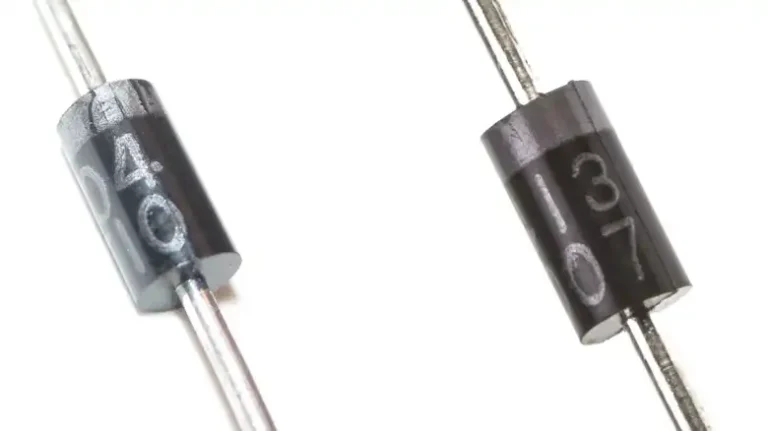
Most small diodes are rated for a junction temperature of 150°C. Sounds like a lot. It is not, once you add ambient heat on top of self-heating. I have watched a plain 1N4007 sit at 110°C in a warm enclosure while doing nothing wrong on paper.
What Makes a Diode Run Hot
These are the six causes I check, roughly in the order they bite. Each one has a fix.
-
Too much forward current. Every diode has a maximum average current. Go past it and dissipation climbs fast. Fix: keep the working current under about 60% of the rated value, and step up to a bigger diode if you are close.
-
High power dissipation. The math is simple. P equals V times I. A 3 A load through a 1 V drop is 3 W, and 3 W will cook a small package. Fix: pick a Schottky diode. Its drop is near 0.3 V, so it wastes less than half the heat.
-
Reverse breakdown. Push reverse voltage past the rated PIV and the diode conducts backward, hard. Current spikes, heat spikes, and the part often shorts. Fix: rate the diode for at least 2 times your peak reverse voltage.
-
High ambient temperature. A hot box means the diode cannot shed heat. The hotter the air, the less current the part can safely carry. Fix: add airflow, or derate. A fan is cheap. A dead board is not.
-
No heat sinking. Power diodes need somewhere to dump heat. Bolt them to metal. Fix: use a proper heat sink with thermal paste, and give it real surface area.
-
Fast switching. In a switching supply a diode heats up every time it turns on and off. Those are switching losses, and at high frequency they add up quickly. Fix: use a fast-recovery or Schottky part rated for the frequency.
Safe Limits at a Glance
| Parameter | Typical small diode | What overheats it |
|---|---|---|
| Forward drop | 0.7 V silicon, 0.3 V Schottky | High current times drop |
| Max junction temp | 150°C | Poor cooling |
| Safe working current | About 60% of rated | Overload faults |
| Reverse rating (PIV) | 2 times peak reverse | Breakdown |
Numbers vary by part, so read the datasheet. The difference between a 1N4001 and a 1N4004 is mostly reverse voltage, not current, and swapping them by accident is a classic overheating cause.
A Quick Decision Tree
Not sure why yours runs hot? Walk it step by step.
- Hot with no load? Then it is leaking or partly shorted. Replace it.
- Hot only under load? Measure the current. If it sits near the rating, upsize the diode or drop to a Schottky.
- Hot only in a warm case? It is ambient. Add airflow or derate the part.
- Hot in a switching circuit? Suspect switching losses. Move to a faster diode.
How I Check a Warm Diode on the Bench
Here is my routine, and it takes two minutes. I power the board. Then I touch each diode with the back of my finger. If I cannot hold it, that is past 60°C, so I stop and think. Next I meter the forward drop with the diode live, and I do the arithmetic. Drop times current gives watts. If that number beats the datasheet, the part is living on borrowed time. My old boss had one rule: “if you can’t hold a finger on it, it is already too hot.” I have killed enough diodes to trust that over my gut.
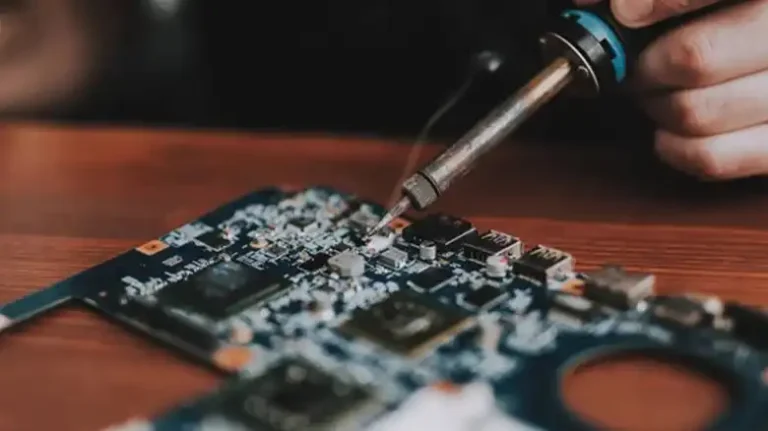
One more thing. Soldering matters too. Cook the leads too long and you stress the junction before it ever sees a load, so try not to damage it during a rushed soldering job.
What Happens When a Diode Overheats
Nothing good, and it stacks. First the forward drop drifts and leakage current creeps up. Then efficiency falls, sometimes by 20 percent or more. Left alone, you hit thermal runaway. Heat raises leakage, leakage raises heat, and the loop feeds itself in seconds. The end state is a dead short or an open part, and it can drag neighbors down with it. That is the same trap that makes other parts overheat once one component starts cooking its own corner of the board.
For the underlying physics, see the thermal runaway writeup, and the general diode article if you want the fundamentals.
Frequently Asked Questions
Can diodes overheat even within their current rating?
Yes. A hot enclosure, weak heat sinking, or a forward drop higher than you assumed can push a diode past 150°C at rated current. Ambient heat counts against your thermal budget.
Can diodes overheat and still work afterward?
Sometimes. A brief overheat may only raise leakage and shift the drop a little. Repeat it, or hold it there, and the damage turns permanent. I would replace any diode I know cooked hard.
Can diodes overheat from reverse voltage alone?
Yes, and this one is nasty. Past the PIV rating the diode breaks down and conducts backward, so current and heat spike together. Rate for at least 2 times your peak reverse voltage.
Can diodes overheat at very low current?
Rarely from current on its own. But add a 90°C ambient and poor cooling, and even a light load can push the junction up. Low current is not a free pass.
How hot is too hot for a diode?
If you cannot comfortably hold a finger on it, it is past roughly 60°C and worth a look. The junction runs far hotter than the case, often 30°C to 40°C above what you feel outside the package.
Does a Schottky diode overheat less?
Usually, yes. Its lower forward drop, near 0.3 V, means less power wasted as heat at the same current. That can cut dissipation by more than half in a rectifier.
Can a bad diode make other components overheat?
Yes. A shorted diode dumps extra current into the circuit, and that heat spreads. One failed part often drags its neighbors down within minutes.
Bottom Line
So, can diodes overheat? Absolutely, and current, poor cooling, and reverse breakdown are the usual culprits. Keep the working current near 60% of the rating, watch the junction against that 150°C ceiling, and reach for a Schottky when heat is tight. Do the P equals V times I math once, and you will catch most problems before they smoke.