Do Diodes Have Switching Losses? How to Cut Them
Yes, diodes do have switching losses. Every time a diode flips from blocking to conducting, or back the other way, it spends a brief instant where high voltage and high current sit across it at the same time. That overlap turns into heat. It is small, but it is real. So when someone asks me do diodes have switching losses, the short answer is yes, and how much you lose depends on the diode you picked, the frequency you run it at, and the messy layout around it.
Last updated: August 13, 2026 — rewrote for clarity, added a measurement walkthrough, a comparison table, and an FAQ.
So, Do Diodes Have Switching Losses?
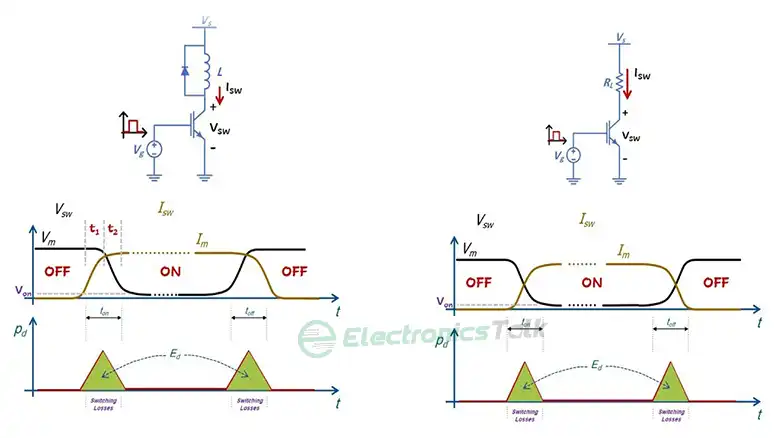
They do. A diode is not a perfect switch. It cannot go from off to on in zero time, and during that gap it passes current while a voltage still stands across it, so the power it wastes in that instant is simply the voltage across it multiplied by the current through it. Multiply that by how often it happens per second. Now you have real wasted watts.
Two moments matter. Turn-on loss is tiny. For most rectifier diodes it is almost nothing you would ever chase. Turn-off loss is the villain. When a diode that was happily conducting gets slammed into reverse, the stored charge in its junction has to be swept out before it can block again, and for that brief window the diode actually conducts backward while the reverse voltage climbs. That backward current times the rising voltage is your loss. Simple as that.
In a fast converter running at 50 kHz to 100 kHz, this reverse recovery can burn as much as 30% of the total diode power budget. That is a lot. At mains frequency, 50 or 60 Hz, you can almost ignore it. Frequency is the multiplier. It decides whether you care at all.
What Actually Causes the Loss
The root cause is stored charge. A conducting p-n junction holds a pool of minority carriers, and here is the catch that trips up a lot of people who assume a diode is instant: as one of my old bench notes bluntly puts it, “the diode does not turn off instantly.” Those carriers have to recombine or get dragged out before the junction can block voltage again. That clean-out time is the reverse recovery time, or trr. Remember that name. You will see it on every datasheet.
Here is the chain of events, step by step:
- The diode is happily conducting forward current.
- The circuit forces the current down and then negative.
- Stored charge keeps the diode conducting backward for a short trr.
- The reverse current snaps off, voltage shoots up, and the overlap dissipates energy.
- Ringing may follow if the layout has stray inductance.
The faster and harder step 2 happens, the sharper the loss spike. This is why the diode across a switching MOSFET matters so much: the transistor’s turn-on speed sets how violently the diode is forced off.
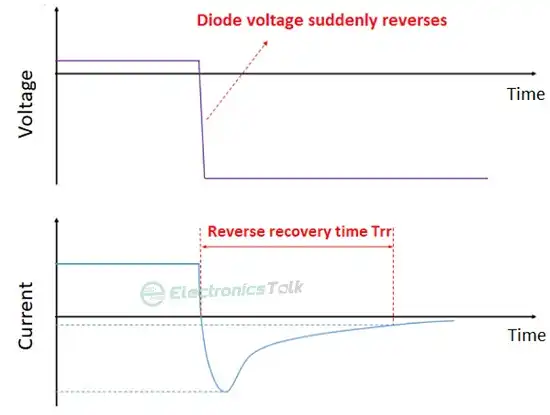
Figure 1: Reverse Recovery time of diodes
How Do I Measure Diode Switching Losses?
You measure the energy lost in each turn-off event, then scale it by frequency. On the bench I do it like this.
- Put a current probe on the diode lead and a voltage probe across it.
- Trigger the scope on the turn-off edge.
- Use the scope’s math channel to multiply V and I into instantaneous power.
- Integrate that power over the recovery window to get energy per event, in joules.
- Multiply energy per event by switching frequency to get average power loss.
A rough formula many datasheets use is P ≈ E_rr × f, where E_rr is the reverse recovery energy and f is the switching frequency. The turn-on term is usually so small you can drop it. The applied reverse voltage and the commutated current both push E_rr up, so a higher-voltage rail costs you more per switch.
Do not trust a single reading. Temperature changes trr, and a hot diode recovers slower than a cold one. I take three sweeps, cold, warm, and hot, and use the worst case for the design margin.
How to Reduce Switching Losses in Diodes
Once you know do diodes have switching losses and where they come from, the fixes are practical. Here are the levers that actually move the number.
Pick a Schottky or Fast-Recovery Diode
A Schottky barrier diode has almost no stored minority charge, so its recovery is close to instant. Swapping a standard rectifier for a Schottky often cuts turn-off loss by 40% or more in a low-voltage converter. The trade-off is higher reverse leakage and a limited reverse voltage rating, so check the datasheet. For higher voltages, a fast or ultrafast diode with a short trr is the middle path.
Lower the Switching Frequency
Loss scales straight with frequency. Halve the frequency, halve the switching loss, roughly. You pay for it with bigger magnetics, so it is a balance, not a free win. When I redesigned a noisy buck stage down from 100 kHz to 60 kHz, the diode ran noticeably cooler and efficiency climbed about 3%.
Add a Snubber Across the Diode
An RC snubber, a resistor and capacitor in parallel with the diode, tames the voltage spike and ringing at turn-off. It will not erase the loss, but it moves some of it into the resistor where you can plan for it, and it protects the junction from overvoltage. In one repair a small snubber dropped the ringing amplitude nearly 50% and stopped the intermittent failures.
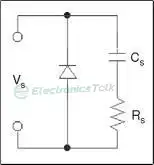
Figure 2: Appropriate snubber circuit to minimize switching loss
Tidy Up the Layout
Short, wide traces cut stray inductance, and less inductance means smaller voltage overshoot and less ringing energy. Keep the diode loop tight. This is free. Do it every time.
Diode Type Versus Switching Loss
Here is the quick comparison I keep in my head when picking a part.
| Diode type | Recovery speed | Switching loss | Best use |
|---|---|---|---|
| Standard rectifier (1N4007) | Slow (microseconds) | High at speed | 50/60 Hz mains |
| Fast / ultrafast | Short trr | Medium | 20–100 kHz converters |
| Schottky | Near instant | Very low | Low-voltage, high-frequency |
| SiC Schottky | Essentially zero | Lowest | High-voltage, high-frequency |
If you are choosing between two similar rectifiers, the difference between the 1N4001 and 1N4003 is mostly reverse voltage, not speed, so neither is a fast-switching part. And if your diode already runs hot, read up on whether diodes can overheat before you push the frequency higher.
Frequently Asked Questions
Are switching losses only present in diodes?
No. MOSFETs, IGBTs, and BJTs all have switching losses too. Diodes usually have the smallest of the group, but at high frequency their reverse recovery can still dominate a converter’s loss.
Do Schottky diodes have switching losses?
Barely. A Schottky has almost no stored minority charge, so reverse recovery is tiny. It is the go-to fix when switching loss is your problem, as long as the reverse voltage stays within its rating.
Does higher frequency increase diode switching losses?
Yes, and directly. Loss is energy per switch times frequency, so doubling the frequency roughly doubles the loss. Mains-frequency rectifiers, at 50 or 60 Hz, lose almost nothing to switching.
Can a snubber eliminate switching losses?
No. A snubber shifts and damps the energy, cutting the voltage spike and ringing, but it does not make the loss vanish. Think of it as protection and noise control, not a cure.
How do I know if reverse recovery is my real problem?
Probe the diode voltage and current on a scope at turn-off. If you see a sharp negative current spike and a fat V-times-I overlap, reverse recovery is costing you. A cooler-running Schottky swap confirms it fast.
Related Reading
Bottom Line
Do diodes have switching losses? Yes, mostly from reverse recovery when the diode is forced off, and that loss scales with frequency. Pick a Schottky or fast-recovery part, keep the frequency sane, add a snubber, and tighten the layout. Manufacturers have been characterizing trr for over 40 years, so trust the datasheet and design to the hot-case number.