Does Capacitance Tolerance Matter? A Practical Guide
Does capacitance tolerance matter? Short answer: usually yes, sometimes no. Tolerance is the percentage band a capacitor’s real value is allowed to drift from the number printed on it. In a timing circuit or a tight filter, a 20% swing wrecks your math. In a decoupling or coupling role, nobody notices. So the honest answer is this: it depends on the job the cap is doing, and how much slop that job can take.

Last updated: August 13, 2026. Rewritten with a when-it-matters decision guide, a bench-checking walkthrough, and an expanded FAQ.
What Capacitance Tolerance Actually Means
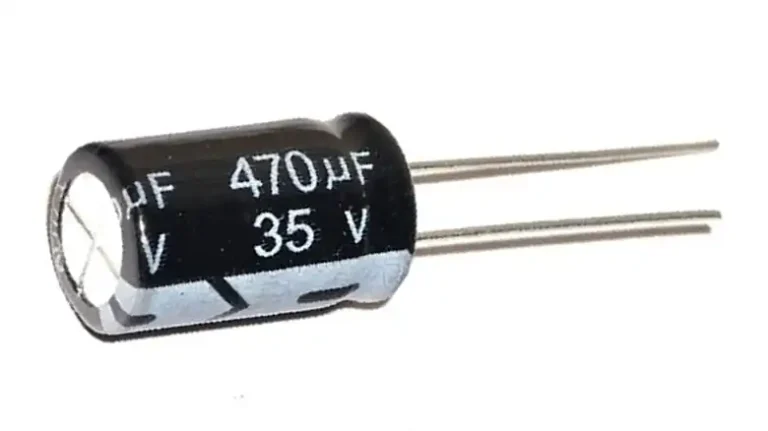
Tolerance is a promise, not a guarantee of an exact number. A cap marked 100 µF at ±10% can legally measure anywhere from 90 µF to 110 µF and still pass its test. The maker prints the band. You live with the spread.
The math is simple. Multiply the nominal value by the tolerance percentage:
Tolerance range (ΔC) = tolerance (%) × nominal capacitance (C)
Take that 100 µF part at ±10%:
ΔC = 10% × 100 µF = 10 µF
So the real value sits between 90 µF and 110 µF. Wider tolerance, wider spread. A ±20% part of the same value could land as low as 80 µF. That is a 40 µF swing across the two extremes, and your circuit feels every bit of it when the value drives timing or frequency.
The Capacitor Tolerance Code

Figure: capacitor tolerance code
Right after the 3-digit value code, most caps carry a single letter for tolerance. Small parts use absolute values in picofarads. Larger ones use a percentage. These letters follow the EIA / RKM marking standard, and here are the ones you will meet most:
| Letter | Tolerance |
|---|---|
| B | ±0.1 pF |
| C | ±0.25 pF |
| D | ±0.5 pF |
| F | ±1% |
| G | ±2% |
| J | ±5% |
| K | ±10% |
| M | ±20% |
| Z | +80%, -20% |
That last one, Z, is brutal. A Z-rated cap can read 80% over or 20% under nominal. Fine for a bulk decoupling job. A disaster in a filter.
Does Capacitance Tolerance Matter for Your Circuit?
Here is the honest split. It matters when the value sets a frequency, a time, or a threshold. It stops mattering when the cap just stores or shunts charge in bulk.
It matters most in:
– Timing circuits, where τ = RC sets the delay
– Active and passive filters, where the cutoff rides on C
– Oscillators, where a few percent shifts the output frequency
– Anything with a threshold voltage that flips a state on or off
You can relax about it in:
– Power-supply decoupling and bypass caps
– DC blocking and AC coupling, where you just need “enough capacitance to do the job”
– Bulk reservoir caps sitting after a rectifier
– Snubbers and other rough, forgiving roles
If you’ve ever wondered what happens when a cap value is off, tolerance is the quiet version of that same problem. Small, legal, and still able to bite you in the wrong spot.
How I Check Tolerance on the Bench
On the bench I keep a simple rule: “measure twice, then spec once.” Here is the routine I run when a value has to be right.
- Read the printed value and the tolerance letter first. Know the legal band before you measure anything.
- Set my LCR meter to the correct test frequency. Electrolytics get measured at 120 Hz, small ceramics at 1 kHz.
- Measure the actual capacitance. Write it down.
- Compare against the band. A 100 µF ±10% part reading 94 µF is fine. Reading 118 µF is not.
- For timing or filter work, hand-match parts. I will measure ten caps and pick the two closest to nominal.
That last step saves me hours. When I need a filter to land on its corner frequency, I don’t trust the print. I measure. Two caps off the same reel can sit a good 8% apart, and that gap alone moves your cutoff.
Filters and Timing: Where Tolerance Bites
In a filter, the cutoff frequency rides on the RC time constant. Change C, and the corner moves with it. A ±10% cap can shift a 1 kHz cutoff by roughly 100 Hz on its own, before the resistor adds any error of its own. Stack a loose cap on a loose resistor, and the real corner can wander well off target.
Timing is the same story. In an RC timing circuit the constant τ = RC sets how long the cap takes to reach about 63.2% of the supply voltage. Bigger C, longer delay. If your cap runs 20% high, your delay runs about 20% long. In a blink rate, nobody cares. In a precision timer feeding a counter, that error compounds fast.
This is also why dielectric choice matters. A film cap beats a ceramic for a tight filter, because its value drifts less with temperature and applied voltage. And if you are picking parts for a design meant to last, the lifespan of electrolytics matters as much as their opening tolerance, since they drift as they age.
Frequently Asked Questions
Does capacitance tolerance matter in a power supply?
Mostly no. Bulk and decoupling caps just need to be big enough, so a ±20% part is fine here. The one exception is a supply feeding a precise reference or a timing chip.
What tolerance should I use for a filter?
Use ±5% (J) or tighter. For audio crossovers and instrument filters, ±1% (F) film caps are worth the extra cost. They hold the corner frequency where you put it.
Is a ±20% capacitor ever acceptable?
Yes, often. In coupling, bypass, and bulk storage a ±20% (M) cap does the job well. I reach for them for decoupling every day without a second thought.
How much does temperature change capacitance?
A lot, on cheap ceramics. A Y5V part can lose over 50% of its value across its rated temperature range, which dwarfs its printed tolerance. Check the temperature coefficient, not just the tolerance letter.
Does the tolerance of an AC motor capacitor matter?
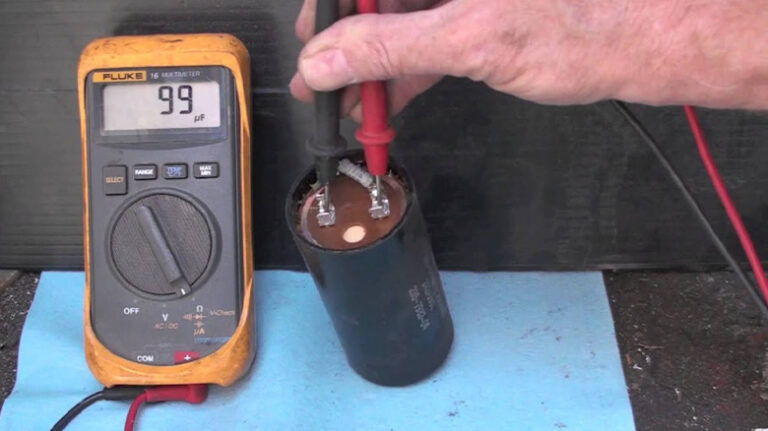
Yes. Motor run and start caps are sized for a specific motor. Stray too far off value and the motor runs hot, loses torque, or hums. Stay within the rating printed on the can.
Related Reading
Bottom Line
Does capacitance tolerance matter? Yes, whenever the value sets a frequency, a delay, or a threshold. And no, when the cap is just there to store or pass charge in bulk. Read the letter, know the band, and measure the part when the number has to be exact. Spend your tight-tolerance budget where the circuit actually feels it, and buy the cheap wide-tolerance parts for everywhere else.