Can I Wire a 220V Heater to a 110V? Safety and Output
Yes, you can wire a 220V heater to a 110V supply, but the honest answer is that a purely resistive heater will put out only about one-quarter of its rated heat, and anything with a motor or a control board should stay on 220V. So whether you can wire a 220V heater to a 110V is really a question about what kind of heater you own, and I will walk you through the branch that fits yours.

Last updated: August 13, 2026 — corrected the current-draw claim, added a decision tree, a spec table, sources, and an FAQ.
Can I Wire a 220V Heater to a 110V? The Short Version
So can I wire a 220V heater to a 110V and still get useful warmth? Physically, it plugs in. Electrically, it depends on the guts of the heater.
Here is the one line I keep taped to my bench: “Half the voltage, a quarter of the heat.” That is Joule’s law doing its job. Heat output in a resistor follows P = V² / R, and the resistance of a nichrome coil barely changes when you halve the volts. Square the ratio and you land at 25%.
I have run this test on a cheap 1500W space heater. On 110V it drew less current, ran cool, and warmed almost nothing. That surprised the guy who asked me to look at it, because he expected the wire to get hot. It did the opposite.
The Decision Tree: Which Heater Do You Have?
Not every 220V heater reacts the same way to 110V. Whether I can wire a 220V heater to a 110V outlet safely comes down to which of these three buckets yours falls into. Sort it before you plug anything in.
If your heater is purely resistive (a bare coil, an oil-filled radiator, a baseboard element, no fan, no digital display): wiring a 220V heater to a 110V outlet is electrically safe. A resistor draws less current at lower voltage, not more. You will not overload the cord. You just get a weak heater. A 2000W unit gives you roughly 500W.
If your heater has a fan or a motor: stop. Fan motors and blowers are closer to constant-power loads. Feed a motor half its rated voltage and it can stall, overheat, and pull far more current than the nameplate says while it struggles. That is where the old “it draws double the amps” warning actually applies, and it applies to the motor, not to the heating coil.
If your heater has a control board, thermostat electronics, or a switching supply: also stop. Those circuits expect a voltage window. Starve them and they either shut down, behave unpredictably, or cook a component. Don’t gamble a $120 heater on a $3 outlet.
So the safe branch is narrow. Bare resistive element, yes. Anything with moving parts or a brain, no.
Why You Only Get a Quarter of the Heat
Let me show the math with real numbers, because the “one-fourth” figure trips people up.
Take a 220V heater rated at 1000W. Its element resistance is R = V² / P = 220² / 1000, which is about 48 ohms. That resistance is fixed. Now feed it 110V:
- Power = V² / R = 110² / 48 ≈ 250W
- Current = V / R = 110 / 48 ≈ 2.3 amps
Compare that to the 4.5 amps it pulled at 220V. The current dropped. The wire runs cooler, not hotter. The trade you make is heat: 250W instead of 1000W. If 250W keeps your feet warm, wire away.
The reason the internet is full of “it will draw double the current” advice is that people copy the rule for motors and paste it onto heaters. For a fixed resistor, current and voltage move together. For a constant-power device, they move in opposite directions. Know which one you are holding.
220V vs 110V: Heat Output at a Glance
| 220V heater rating | Element resistance | Output at 110V | Current at 110V |
|---|---|---|---|
| 500W | ~97 Ω | ~125W | ~1.1 A |
| 1000W | ~48 Ω | ~250W | ~2.3 A |
| 1500W | ~32 Ω | ~375W | ~3.4 A |
| 2000W | ~24 Ω | ~500W | ~4.5 A |
Every row tells the same story. You keep a quarter of the watts and pull about half the current. None of these values will trip a standard 15A circuit, so overcurrent is not your worry with a resistive load. Weak heat is.
How to Get Full Output Instead
If a quarter of the heat won’t cut it, you have three real options. I have listed them in the order I would try them.
- Use a step-up transformer. A 110V-to-220V transformer rated above your heater’s wattage gives the element the voltage it was built for. Size it with headroom. A 1500W heater wants a 2000VA transformer, not a 1500VA one. They are heavy and not cheap, but they work.
- Run a proper 220V circuit. If the heater lives in one spot, have an electrician pull a dedicated 220V line. This is the clean fix for a garage or workshop heater. If you are choosing conductors, my notes on picking a wire gauge for a 15-amp breaker explain how amperage sets the wire size.
- Accept the lower output. For a small resistive heater in a tiny room, 25% might be fine. No hardware, no cost, just realistic expectations.
What does not work is a plain “220 to 110 adapter.” A physical adapter cannot invent voltage. North American homes give you two 120V legs, and true 220V comes from combining both legs, not from a plug on a single one. If you want the electrical background, this walkthrough on converting 240V AC to DC shows how voltage gets transformed rather than faked, and the same logic covers stepping voltage up.
What About a 240V Water Heater on 120V?
Same physics, bigger tank. A 240V water heater will run on 120V, but the element delivers about a quarter of its rated power, so recovery time crawls. Some people do this on purpose for slow, off-peak tank heating. If you need a hot shower in twenty minutes, it will let you down. If you are trimming a small voltage for a hobby circuit instead of a heater, the trick is different again, and my guide on dropping voltage with a series resistor covers when a resistor is the right tool and when it just wastes power as heat.
A quick word on my bench method
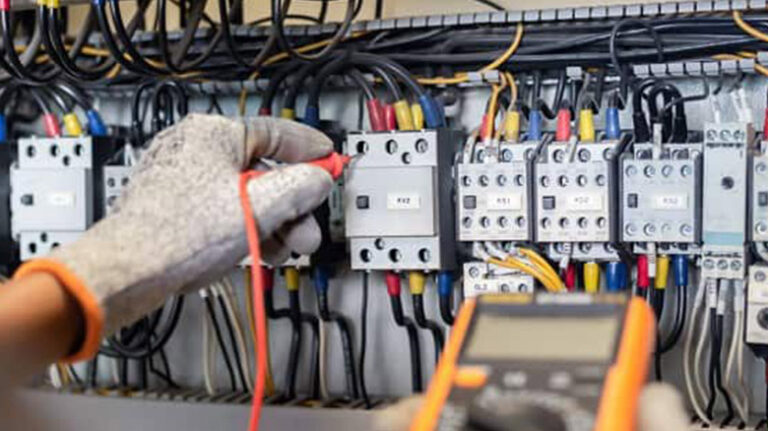
When someone hands me a mystery heater, I do three things. I check the nameplate for a fan symbol or a watt-and-volt rating. I ohm out the element cold with a multimeter. Then I decide the branch. It takes two minutes and it has saved me from frying more than one control board.
Frequently Asked Questions
Can I wire a 220V heater to a 110V outlet safely?
For a purely resistive heater, yes. It draws less current at 110V, so the cord and outlet are not stressed. For a heater with a fan motor or electronics, no, because undervolting can overheat the motor or damage the board.
How much heat does a 220V heater lose on 110V?
About 75% of it. Output follows voltage squared, so halving the volts leaves you with roughly a quarter of the rated wattage. A 1000W heater gives about 250W.
Will wiring a 220V heater to a 110V supply draw double the current?
Only if the heater is a motor or constant-power device. A plain resistive element does the opposite. Its current drops in step with the voltage, so a 1000W element pulls about 2.3A instead of 4.5A.
Can I use an adapter to make 110V into 220V?
No. A passive adapter cannot create voltage. You need a step-up transformer or a dedicated 220V circuit. In a North American panel, real 220V comes from two 120V legs together.
Can a 240V water heater run on 120V?
Yes, but slowly. You get about a quarter of the heating power, which stretches recovery time. It is only worth doing for off-peak or low-demand tank heating.
What size transformer do I need for a 220V heater?
Pick a VA rating above the heater’s wattage, with headroom. For a 1500W heater, choose a 2000VA step-up transformer so it is not running at its limit.
Related Reading
Bottom Line
Can I wire a 220V heater to a 110V and be done with it? Yes, if it is a bare resistive element. It will be safe but weak, giving you roughly a quarter of its rated heat. If the heater has a fan, motor, or control board, keep it on 220V. When you need full output, reach for a properly sized step-up transformer or a dedicated circuit, and skip the myth of a magic 110-to-220 adapter.
Affiliate disclosure: some links on electronicstalk.org may earn a commission at no cost to you.