Can Resistors Change Value Over Time? A Practical Guide
Can resistors change value over time? Yes, but usually by a tiny amount. A quality metal film part might shift less than 1% across decades of use. Cheap carbon parts drift more. Heat, humidity, self-heating, and mechanical stress are the main reasons a resistor wanders from its marked value. In most hobby and consumer circuits, that drift is small enough to ignore.
Last updated: August 13, 2026. Added a drift-by-type table, real ppm and percent figures, a bench section, and an FAQ.
How Much Drift Are We Talking About?
Not much. That is the short answer for most parts.
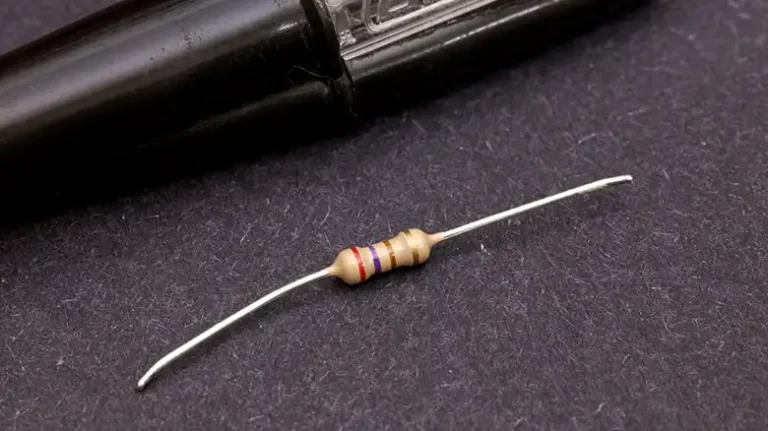
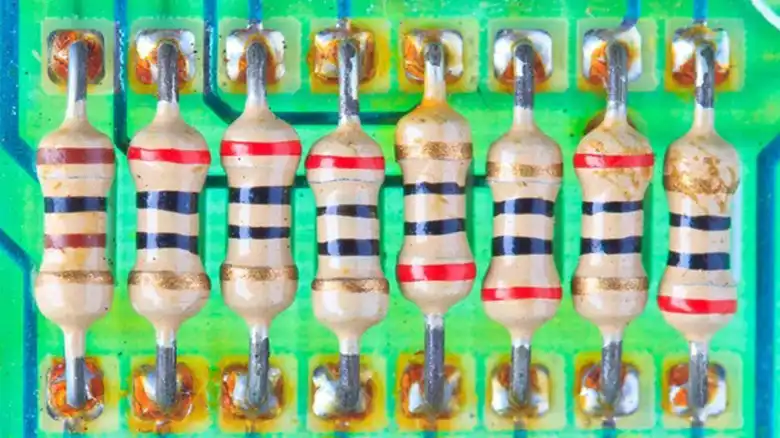
A garden-variety carbon film resistor is marked ±5%. Over 20 years of steady use it might creep another 1% to 2% from that starting point. A precision metal film resistor holds tighter. Many stay inside “less than 0.5% over its whole service life,” even at elevated temperature. Wirewound parts are steadier still.
So the value moves. It just moves slowly, and it rarely breaks anything. The exception is precision analog work, where a fraction of a percent matters.
Here is the rough picture by resistor type.
| Resistor type | Typical tolerance | TCR (ppm/°C) | Long-term drift |
|---|---|---|---|
| Carbon composition | ±10% | 1000+ | High, moisture-sensitive |
| Carbon film | ±5% | 200 to 500 | Moderate |
| Metal film | ±1% | 50 to 100 | Low, stable |
| Wirewound | ±0.1% to ±1% | 20 to 50 | Very low |
Can Resistors Change Value Over Time in a Real Circuit?
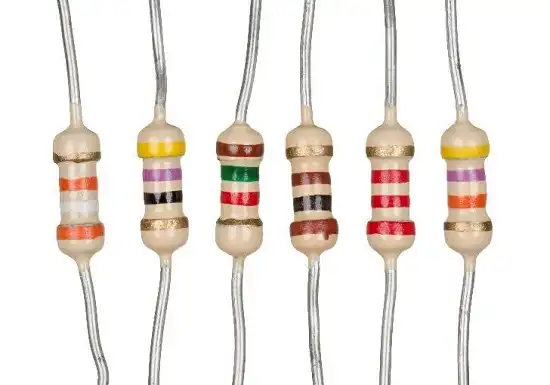
Usually the answer is no, not in a way you will notice. In the majority of applications, the small resistance increase from age or self-heating has no visible effect on how the circuit behaves. A blinking LED, a pull-up line, an audio filter with 5% parts, none of these care about a fraction of a percent.
Precision gear is different. In a voltage divider feeding an ADC, or a bridge in a measurement instrument, two resistors that age at different rates will slowly skew the ratio. That is why lab equipment gets periodic calibration. If you have ever wondered whether carbon resistors go bad, the honest answer is that they drift and get noisier long before they truly fail.
Why Resistor Values Change Over Time
Several things nudge a resistor away from its marked value. Here they are, worst to mildest.
- Aging and drift. The resistive material degrades slowly. A simple model is ΔR = R₀ · β · t, where β is the aging coefficient and t is time in service. Resistance usually creeps upward.
- Temperature. Every resistor has a temperature coefficient (TCR). The relationship is R₂ = R₁ · (1 + α · (T₂ − T₁)), with α in ppm/°C. Read more on temperature coefficient if you want the physics.
- Self-heating. Current makes heat. Joule heating gives Q = I² · R · t. That heat raises the part’s temperature, which then shifts resistance through its TCR. Running near the power rating for 2000 hours ages a part faster than running it cool.
- Mechanical stress. Bending, board flex, and thermal expansion strain the element. The piezoresistive effect describes this as ΔR = R₀ · (GF · ε), where GF is the gauge factor and ε is strain.
- Moisture. Humidity is brutal on carbon composition parts. Water gets into the body and the value wanders, sometimes by several percent.
Moisture and heat do the most damage. Mechanical strain matters mostly for surface-mount parts on a flexing board.
How I Check for Drift on the Bench
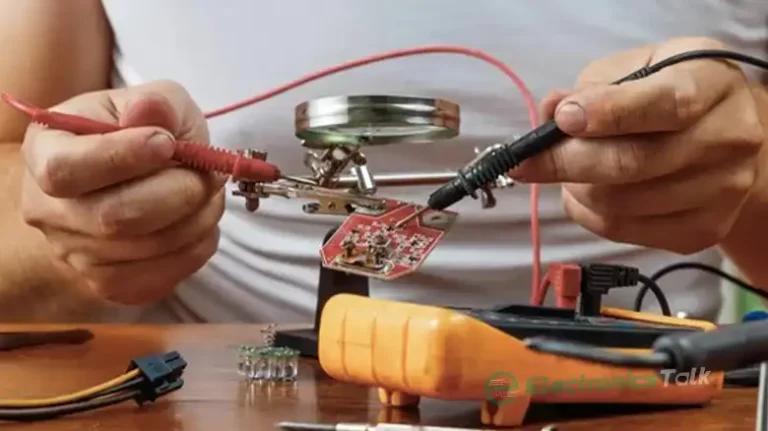
Here is what I actually do. When I suspect a resistor, I pull it out of circuit first, because in-circuit readings lie. Then I measure it cold with a good DMM. I compare against the color code or printed value. Simple.
If it reads within tolerance, I move on. Done. But if a 5% part reads 8% high, I don’t trust it in anything analog. In my experience, old carbon composition resistors in vintage tube gear can drift 20% or more, which is enough to knock a bias point far out of where the designer ever intended it to sit. Those get replaced without a second thought. When you probe a part that also runs warm, remember that resistors run hot for a reason, and heat and drift travel together.
One habit saves real grief. Derate. Pick a part rated for at least twice the power it will actually dissipate. A resistor loafing at half its rating barely ages at all.
Which Resistors Drift the Most?
Rank them like this, from most to least stable.
- Wirewound. The most stable. Tiny TCR. Used in precision and measurement gear.
- Metal film. 1% tolerance, low drift, the default for good analog work.
- Carbon film. Fine for general use, moderate drift.
- Carbon composition. The drama queen. Moisture-sensitive, and it ages fast.
If stability matters, reach for metal film or wirewound. They resist temperature, aging, and stress far better than carbon parts. This is the same logic behind rating margins in general. The lifespan of electrolytics follows a similar rule: pick the right part and give it headroom, and it lasts decades.
Frequently Asked Questions
Can resistors get old?
Yes. A resistor’s lifespan is not fixed and varies by type. Run one below half its rated power and voltage and it can last 50 years without a meaningful shift. Push it near its limits and it ages fast.
Can a resistor lose resistance?
Not on its own. Resistance is set by the material, length, and cross-section, and those hold steady when the part is healthy. A resistor can appear to read low after overheating, contamination, or physical damage, but that is a fault, not normal aging.
Which type of resistor cannot change its value easily?
Precision fixed resistors are built to stay put. Metal film and wirewound types resist drift from temperature, stress, and age, which is why they show up in measurement equipment and precision analog circuits.
Does resistor drift affect my circuit?
Usually not. A shift under 1% is invisible in most digital and consumer designs. It only bites in precision work, where a bridge or divider needs periodic calibration.
How do I stop resistors from drifting?
Derate the part, keep it cool, and choose metal film or wirewound for anything sensitive. Good airflow and a dry enclosure do the rest.
Bottom Line
Can resistors change value over time? Yes, but for most work the drift is trivial, well under a percent for a decent part. Heat, moisture, and cheap carbon construction are what push it higher. Pick metal film or wirewound, derate for power, keep things cool, and your resistors will hold their marked value for the life of the board.