AC Capacitor Keeps Blowing? Causes, Signs, and Fixes
An AC capacitor keeps blowing mostly because something feeds it more electrical stress than its rating can take. The usual suspects are a power surge, trapped heat, a mismatched voltage rating, or a motor that drags and hauls too much current through the part every time it tries to spin up. A capacitor is a small energy tank that shoves the compressor and fan into motion, so once it dies, the whole unit stalls. I have swapped a pile of these on the bench, and in my experience the story barely changes from one call to the next. Fix the root cause first. Skip that, and the shiny new one pops in a week.

Last updated: August 13, 2026. Rewrote the guide with a step-by-step diagnosis, a spec table, and an FAQ.
Why Your AC Capacitor Keeps Blowing
Think of the capacitor as the weak link that shows stress first. It sits deep in the condenser cabinet, close to heat and high voltage, and it takes the hit when anything upstream goes wrong. When an AC capacitor keeps blowing, one of these is almost always behind it:
- Power surges and lightning. A voltage spike can shove far more than the rated 370 V or 440 V across the plates. The dielectric punches through. It bursts.
- Trapped heat. These parts hate heat. Cook the electrolyte and it dries out early, which is also why electrolytics have a real lifespan.
- Wrong voltage or µF rating. Drop in a mismatched part and you are asking it to do a job it was never built for. There is a whole rabbit hole on using the wrong size capacitor.
- A dragging motor. Worn compressor or fan bearings pull locked-rotor current for too long. The cap stays in the circuit and overheats.
- A stuck relay or contactor. If the potential relay never drops the start cap out, it charges over and over and fails in weeks, not years.
- Plain old age. Even a good cap wears out. Most last about 20 years, though hard cycling shortens that fast, and yes, capacitors do fade as they age.
Signs a Failing Capacitor Is the Culprit
Before you blame the capacitor, rule out the cheap stuff. A clogged filter or a tripped breaker mimics half of these symptoms. Slow down. Once the obvious culprits are ruled out, watch for the classic tells that a dying capacitor leaves behind, because each one on its own is only a hint and it is the pile-up of several together that turns suspicion into a diagnosis:
- Warm air instead of cold, even with the thermostat set low.
- The unit hums for a few seconds, then shuts off without ever starting.
- A hard click, then nothing, when the compressor tries to kick in.
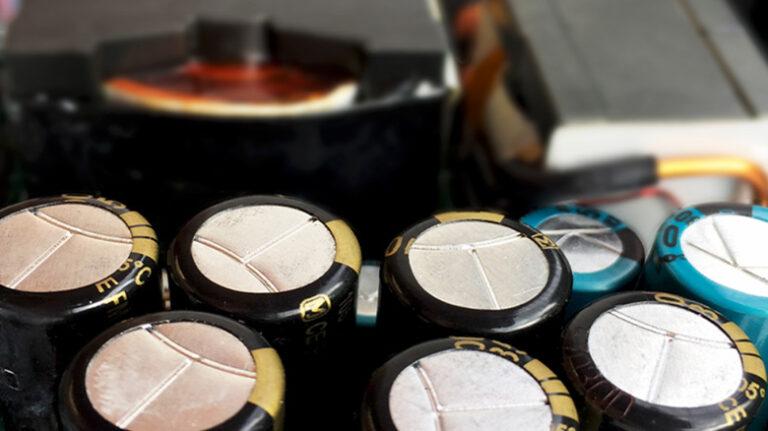
- A bulged or domed top on the cap, or oil weeping from the can.
- Your power bill creeps up because the motor strains on every start.
None of these is proof on its own. A humming, no-start compressor could just as easily point to a burnt contactor, a seized fan bearing, or a low-charge refrigerant fault dragging the whole system down. So you test. You never guess.
How to Diagnose It Step by Step
Here is the order I work in. High voltage is no joke, so treat every capacitor as charged until you prove otherwise. If you are not comfortable working around 400 to 600 volts, stop here and call an HVAC tech. There is no shame in it.
- Kill the power. Shut the disconnect at the unit, then the breaker at the panel. Wait 5 minutes.
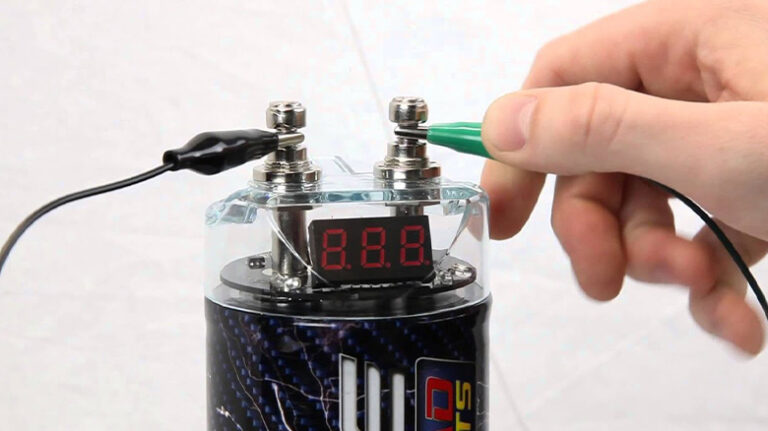
- Discharge the cap. Bridge the two terminals through a 20 kΩ resistor for 10 seconds. Never short them with a screwdriver.
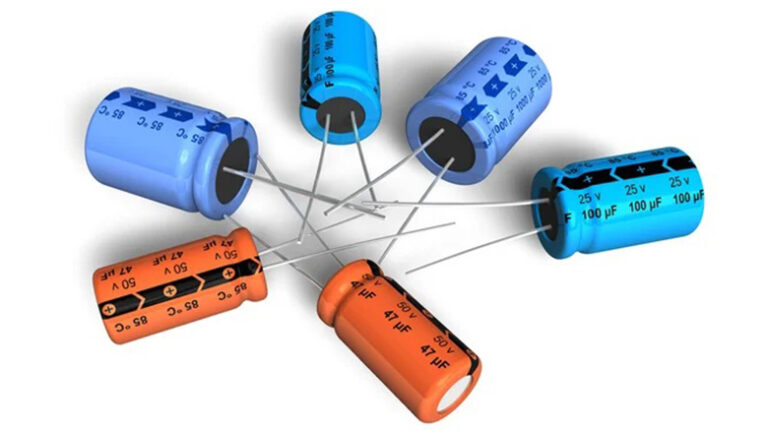
- Read the label. Note the µF and the voltage rating. A dual run cap shows two numbers, like 40/5 µF at 440 V.
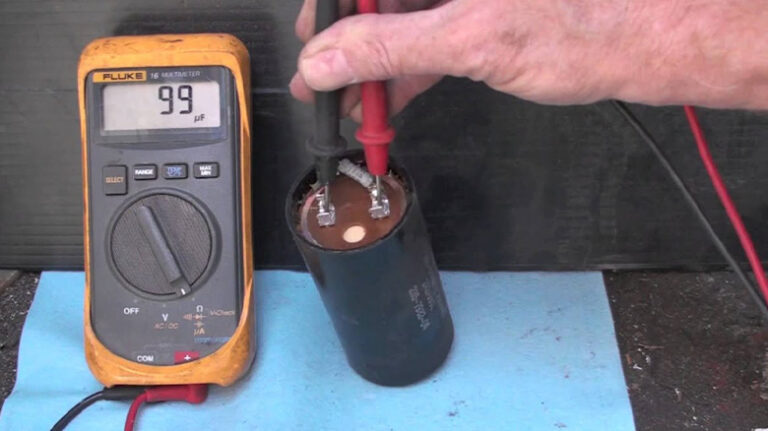
- Test it. Set a meter to capacitance and compare it to the label. If a hard start part is in the mix, my walkthrough on testing a hard start capacitor covers the exact steps.
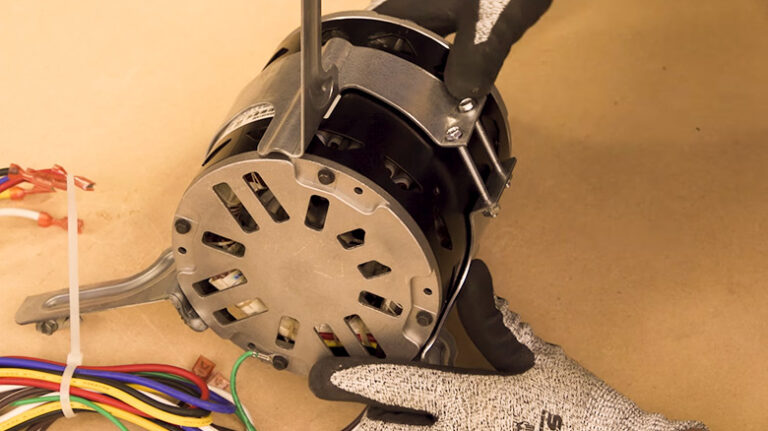
- Check the motor. Spin the fan by hand. Stiff or noisy bearings mean the motor is the real problem, and a fresh cap will blow again inside a season.
- Match the replacement. Same µF, same or higher voltage. Match it. Done.
If the meter reads more than about 6 percent off the marked value, the part is toast. Whether that small a drift even counts depends on the job, and I dug into that in a piece on whether capacitance tolerance matters.
Capacitor Ratings That Matter
Most repeat failures trace back to a single mismatched number. Keep this table handy before you buy a replacement.
| Spec | What it means | Get it wrong and |
|---|---|---|
| Capacitance (µF) | How much charge it delivers to start the motor | Too low, the motor won’t start; too high, the windings overheat |
| Voltage rating (V) | Max volts the dielectric survives | Under-rated, a surge punches through and it blows |
| Run vs start | A run cap stays in circuit; a start cap drops out fast | A start cap left in the circuit cooks in days |
| Tolerance | Allowed drift from the marked µF | Beyond about 6% off, the motor runs rough and hot |
A capacitor is basically two plates and a dielectric that stores energy. Feed it clean voltage inside its rating and it lasts. Push it past that line and it fails, sometimes with a bang, sometimes with a slow leak of oil.
How I Do It on the Bench
On my bench, I never trust a fresh capacitor until I understand what killed the last one, because a part that pops twice is telling you a story about the machine it lives inside, not about its own quality. A repeat failure is a symptom, not the disease. Last summer a neighbor’s condenser chewed through three caps in a single season, and every single part measured perfect when I bench-tested it afterward. The contactor had welded shut. So the start cap never dropped out. One $12 relay fixed the whole mess. When you skip that check, you just keep buying components and cursing the brand name printed on the label. An old tech once told me, “the capacitor is the fuse for a sick motor,” and honestly he was right more often than not. Ask what killed the last one before you order the next.
A quick word on surges, since they cause a stubborn share of these failures. A cheap whole-house surge protector at the panel guards the compressor, the board, and the cap all at once. It is far cheaper than a fried compressor.
Frequently Asked Questions
Why does my new AC capacitor keep blowing right after I replace it?
Because the root cause is still there. A dragging motor, a welded contactor, or an untamed surge will kill the new one just as fast. Find the fault first, then swap the part.
Can a bad capacitor damage the compressor?
Yes. A weak start cap makes the compressor strain on every start, and repeated hard starts can burn the windings. Replace a failing cap quickly to protect the pricey parts.
Is it safe to replace an AC capacitor myself?
Only if you respect the charge. These hold 400 to 600 volts even with the power off. Discharge it through a resistor first. If that sounds risky, call a pro.
How long should an AC capacitor last?
A quality run capacitor lasts about 20 years in a mild climate. Heat, power surges, and short cycling can cut that down to 2 or 3 years.
Does a higher voltage rating hurt anything?
No. A higher voltage rating is fine and often safer. Match the microfarad value exactly, then pick the same or a higher voltage.
Can I use a slightly different µF rating?
Not on a run capacitor. Stay within about 6 percent of the marked value, or the motor runs hot and rough and the cap dies young.
Related Reading
Bottom Line
An AC capacitor keeps blowing when something upstream overloads it: a surge, trapped heat, a mismatch, or a tired motor. The cap is rarely the real villain. Test the motor and the contactor before you spend another dime on parts. Match the µF exactly, pick the same or higher voltage, and the replacement should last the 20 years it was built for.