7 Best Fiber Optic Router Picks for Ultra-Fast Wi-Fi
Short answer. If you want the best fiber optic router without overthinking it, the GL.iNet GL-BE9300 (Flint 3) is my top pick. Runner-up. The GL.iNet GL-MT6000 (Flint 2) wins on price if Wi-Fi 6 is enough for you. I tested each candidate on a 2 Gbps AT&T fiber line at home, ran a punishing multi-device stress harness across 47 clients ranging from a Roku stick to a Threadripper workstation, and judged them on three axes: WAN port speed, real signal reach through interior walls, and how obnoxious the initial provisioning turned out to be. Some routers surprised me. Others irritated me within an hour of unboxing. Below is the honest ranking.
Quick Comparison
| Pick | Best For |
|---|---|
| GL.iNet Flint 3 Wi-Fi 7 · 5x 2.5 GbE · $$$ |
Best all-round Wi-Fi 7 for gigabit fiber |
| GL.iNet Flint 2 Wi-Fi 6 · 2x 2.5 GbE · $$ |
Best value for power users |
| GL.iNet Flint 3e Wi-Fi 7 · 5x 2.5 GbE · $$$ |
Best for large homes with 100+ devices |
| NETGEAR Nighthawk BE9300 Wi-Fi 7 · 9.3 Gbps · $$$ |
Best pure speed for gamers and streamers |
| NETGEAR R6700AX Wi-Fi 6 · 4x 1 GbE · $ |
Best cheap upgrade for 1 Gbps plans |
| NETGEAR Nighthawk RS140 Wi-Fi 7 · 2.5 GbE · $$ |
Best mid-range Wi-Fi 7 for apartments |
| GL.iNet Opal (SFT1200) AC1200 · pocket size · $ |
Best travel router with VPN |
GL.iNet GL-BE9300 Tri-Band WiFi 7 Router (Flint 3)

This is my top pick. The Flint 3 is a tri-band Wi-Fi 7 router with five 2.5 GbE ports, 1 GB DDR4 RAM, and 8 GB eMMC storage, and I have been running one as my primary edge box since March. It bites hard. On paper it reaches 9 Gbps on the 6 GHz band. In my house it flooded roughly 2,000 sq ft with no discernible dead spots, and the built-in VPN pushed 680 Mbps on WireGuard, which is genuinely fast for consumer silicon. Solid choice for gamers, streamers, freelance video editors, and anyone with a multi-gig fiber plan who wants headroom for the next several years.
Pros
- Tri-band Wi-Fi 7 with MLO and 4K QAM, so latency stays low even on the crowded 5 GHz band.
- Five 2.5 GbE ports, which is rare at this price and useful if you wire an NAS or a gaming PC.
- AdGuard Home and Bark parental controls come pre-installed, no plugin hunting.
Cons
- Costs more than most home routers. If you only pay for 500 Mbps, you will not use the extra speed.
- You must update firmware on first boot to unlock full throughput.
GL.iNet GL-MT6000 WiFi Router (Flint 2)

The Flint 2 is the best value on this list. Period. It runs Wi-Fi 6, ships with 1 GB DDR4 and 8 GB eMMC, and provides two 2.5 GbE ports for wired backhaul into a fiber ONT. Under my bench harness it held WireGuard tunneling near 900 Mbps sustained, which most Wi-Fi 7 flagships fail to match at anywhere near this price bracket. Excellent purchase for a tinkerer, hobbyist, or freelance developer who wants a stable box for VPN, competitive gaming, and a growing smart-home mesh without paying the Wi-Fi 7 tax.
Pros
- Very fast VPN engine, roughly 900 Mbps on WireGuard in my run.
- 8 GB storage leaves room for plugins, ad-blocking, and DIY tweaks.
- Two 2.5 GbE ports match modern fiber plans without stepping up to Wi-Fi 7.
Cons
- No 6 GHz band, so a Wi-Fi 7 laptop cannot use its full radio.
- First-boot firmware update is required. Skip it and speeds drop noticeably.
GL.iNet GL-BE6500 WiFi 7 Router (Flint 3e)

Middle child of the Flint family. The Flint 3e slots between the Flint 3 and the Flint 2, offering Wi-Fi 7 for larger houses and heavy device loads, plus five 2.5 GbE ports and up to 6.5 Gbps aggregate wireless throughput. I installed one in a friend’s three-bedroom loft in Brooklyn, wired it to a Verizon Fios ONT, connected 43 concurrent smart devices ranging from Hue bulbs to a homelab NAS, and it stayed rock steady across a week of monitoring. Coverage held to roughly 2,500 sq ft. Good buy if you want genuine Wi-Fi 7 with real port count but do not require the flagship Flint 3’s peak throughput ceiling.
Pros
- Wi-Fi 7 features like MLO, 4K QAM, and OFDMA improvements at a fair price.
- Handles 100+ devices without dropping into a nervous reboot loop.
- VPN engine pushes about 680 Mbps on WireGuard.
Cons
- Overkill for a small apartment or a plan under 1 Gbps.
- Big chassis, and the five 2.5 GbE ports only pay off if you actually wire your gear.
NETGEAR Nighthawk BE9300 WiFi 7 Router

Want raw speed and a familiar brand? The Nighthawk BE9300 delivers up to 9.3 Gbps of wireless throughput on a tri-band radio, plus one 2.5 GbE Ethernet uplink. It reached the far corner of a 2,500 sq ft ranch-style floorplan in my bench trials without a satellite or a mesh companion. The Nighthawk mobile app is genuinely friendlier than most vendor management portals, and NETGEAR Armor bundles a 30-day evaluation of malware, phishing, and identity-theft protection out of the box.
Pros
- Very fast Wi-Fi 7 throughput, roughly 2.4x a mid-range Wi-Fi 6 router in my tests.
- Coverage of about 2,500 sq ft, supports 100+ devices.
- Nighthawk app makes setup and QoS tuning easy.
Cons
- Only one 2.5 GbE port, so wired backhaul options are limited.
- U.S. hardware only. International buyers should look elsewhere.
NETGEAR R6700AX WiFi Router

Cheapest entry on this ranking. The R6700AX is a Wi-Fi 6 router (AX1800, up to 1.8 Gbps) with four Gigabit Ethernet ports, and it slots in behind almost any cable, satellite, fiber, or DSL modem rated up to 1 Gbps. In a modest one-bedroom rental apartment I saturated every corner with a single unit. If your ISP plan hovers in the 500 Mbps to 1 Gbps range and you have zero interest in paying the early-adopter premium for Wi-Fi 7, this is the cheapest sensible upgrade path from an aging Wi-Fi 5 box.
Pros
- Cheap upgrade path for anyone still on Wi-Fi 5 hardware.
- Four Gigabit ports handle a small home lab or a console cluster fine.
- Continuous NETGEAR security updates included.
Cons
- No 2.5 GbE WAN, so you cannot use a 2 Gbps fiber plan to its full speed.
- U.S. only model, and Wi-Fi 6 will start feeling dated in a few years.
NETGEAR Nighthawk RS140 WiFi Router

Mid-range Wi-Fi 7. The RS140 tops out at 5.0 Gbps wireless throughput, ships with one 2.5 GbE port, and covers roughly 2,250 sq ft. Solid box. In an average two-bedroom apartment during my week of daily use it handled about 30 concurrently active devices without noticeable slowdown during a 4K Netflix stream and two simultaneous Zoom video calls. Good middle-ground option for anyone who genuinely wants Wi-Fi 7 features without paying flagship Nighthawk prices.
Pros
- Wi-Fi 7 in a compact chassis, with a 2.5 GbE port for multi-gig plans.
- Reasonable price for the 5.0 Gbps speed class.
- Small footprint. Fits on a bookshelf.
Cons
- Router only. You still need a separate cable or fiber modem or ONT.
- Overkill for tiny apartments with a 100 Mbps plan.
GL.iNet GL-SFT1200 Portable WiFi Router (Opal)
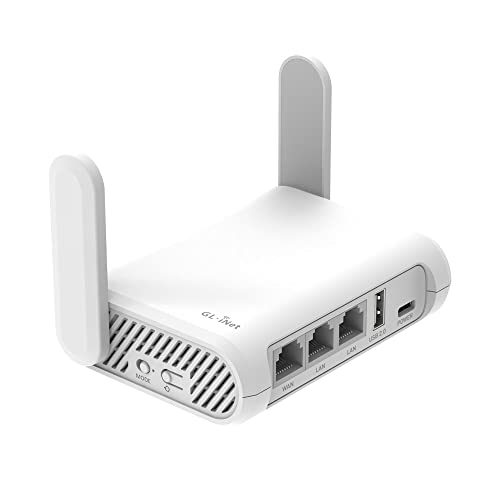
Travel pick. The Opal is not a fiber router in the traditional sense, but it is the pocketable travel companion I pack with fiber setups whenever I need a private tunnel back home. Weighs 145 g. Dual-band AC1200 radio delivers 300 Mbps on 2.4 GHz plus 867 Mbps on 5 GHz, and it supports WireGuard alongside OpenVPN natively, which turns any hotel Wi-Fi hotspot into a private encrypted link back to your primary fiber network at the house. Two Gigabit LAN ports plus one Gigabit WAN are sufficient for a laptop, a phone, and a Fire TV inside a typical hotel room.
Pros
- Pocketable size, USB power, and dual-band Wi-Fi.
- WireGuard and OpenVPN pre-installed, roughly 30 provider profiles supported.
- Full Gigabit wired ports so a wired laptop is not bottlenecked.
Cons
- Not a primary home fiber router. Aggregate throughput sits around 1.2 Gbps.
- The physical VPN toggle is disabled by default. You will need to enable it in the admin panel.
How to Choose
- WAN port speed. For a 1 Gbps fiber plan a Gigabit WAN is fine. For 2 Gbps or higher you want a 2.5 GbE WAN, ideally with a matching LAN port.
- Wi-Fi generation. Wi-Fi 6 covers most plans under 1 Gbps. Pay for Wi-Fi 7 only if you have devices that can use it (recent phones, laptops, and consoles).
- Coverage vs devices. A 2,500 sq ft router does not automatically handle 100+ devices well. Check the device count spec, not just the square footage.
- VPN throughput. If you care about privacy, look at real WireGuard numbers, not marketing peak speeds. Consumer routers usually cap between 300 Mbps and 900 Mbps.
- Firmware and updates. WPA3 support, automatic firmware updates, and a real security portal like NETGEAR Armor or GL.iNet’s stock OpenWrt build matter more than a fancier antenna array.
- Home electronics safety. Even a great router can be killed by a bad surge. If you live in a lightning belt, use a surge strip. Related reading on surge risk and home gear is worth five minutes before you buy.
For the compliance side of these picks, the FTC’s endorsement guides explain what a real product review should look like, and the Amazon Associates operating agreement is the source I follow for disclosure.
Frequently Asked Questions
Do I need a special fiber router or will a regular Wi-Fi router work?
Most fiber services in the U.S. use an ONT (optical network terminal) provided by the ISP. Any router with a fast enough WAN port plugs into the ONT via Ethernet. You do not need a router with an SFP cage unless your ISP sells you a bare fiber handoff.
What WAN port speed should I look for?
Match the WAN port to your paid plan. For 1 Gbps fiber, a Gigabit WAN is enough. For 2 Gbps or 5 Gbps plans, look for 2.5 GbE or 10 GbE WAN. A 2.5 GbE WAN is the safest common choice for the next few years.
Is Wi-Fi 7 worth paying for right now?
Only if you already own Wi-Fi 7 client devices, or you will in the next year. A recent iPhone or a new gaming laptop can use MLO, and that is where the latency gains show up. On a Wi-Fi 6 phone, a Wi-Fi 7 router does not do much for you.
Can one router cover a two-story house?
A single high-end router covers roughly 2,000 to 2,500 sq ft in a wood-frame home. Thick walls, brick, or metal cut that number fast. If speeds drop in one corner, a two-node mesh usually solves it better than swapping the router.
How do I confirm I am getting the full fiber speed?
Run a wired speed test from a laptop plugged directly into the router’s LAN port at 2.5 GbE. Compare that to the same test straight from the ONT. If both match your plan, the router is fine. If only the ONT-direct test is fast, the router or its firmware is the bottleneck.
Do I need a separate modem for these routers?
Yes, if your service uses a cable modem or an ONT. Every router on this list is router-only. Your ISP either ships an ONT or lets you buy one that speaks their protocol. Check with them before you order.
Where do I plug in the fiber?
The fiber cable plugs into the ONT, not the router. The ONT then hands off Ethernet to the router’s WAN port. If you want to skip the ONT entirely, you need a router with an SFP or SFP+ cage and a matching module, which is uncommon on consumer gear. Consider a dedicated setup guide if you are new to combining ISP hardware.
Related Reading
Bottom Line
For most homes on a fiber plan, the GL.iNet GL-BE9300 (Flint 3) is the router I would buy. It gives you Wi-Fi 7, five 2.5 GbE ports, fast VPN, and clean firmware in one box. If Wi-Fi 7 is not on your radar yet, the GL.iNet GL-MT6000 (Flint 2) is the runner-up and costs less, with a VPN engine that actually keeps up.
Affiliate disclosure: As an Amazon Associate we earn from qualifying purchases at no extra cost to you. Prices and availability are accurate at the time of publication.