Does Size Matter in Capacitor Choice? A Practical Guide
Does size matter in capacitor selection? Short answer: yes, but not the way most people assume. The physical size of a capacitor is tied to its capacitance, its voltage rating, and the dielectric inside, not to a vague notion that “bigger is stronger.” A larger can usually means a higher voltage rating or more capacitance. Sometimes it just means an older, cheaper design. What matters is matching four core specs to your circuit, and once those are right, the size takes care of itself.

Last updated: August 13, 2026. Rewritten as a spec-driven sizing guide with a comparison table, a bench workflow, an FAQ, and fresh internal links.
Does Size Matter in Capacitor Choice, Really?
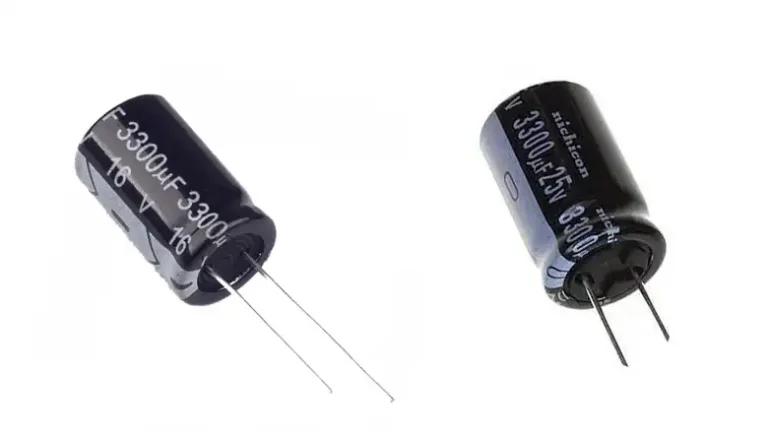
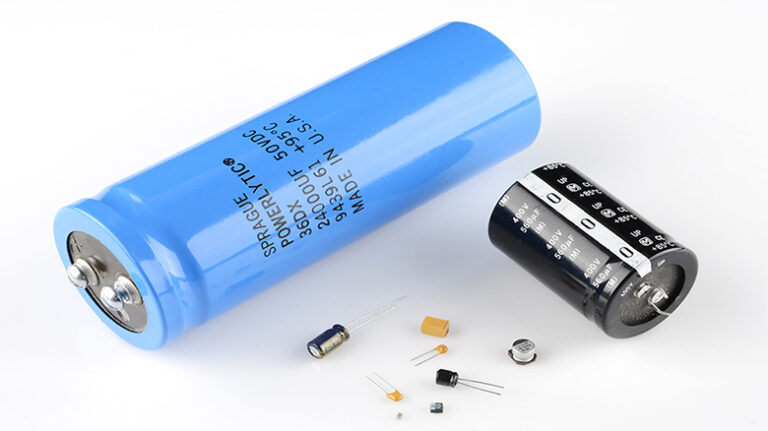
Here is the honest version. Two capacitors can share the same 10 µF value and behave nothing alike. One is a tiny 0603 ceramic chip. The other is a fat aluminum electrolytic the size of your thumb. Same capacitance. Very different size, price, and performance.
So the case tells you something. Never the whole story, though. It hints at the voltage rating. It hints at the dielectric. It hints at ripple handling and lifespan. When I swapped a physically bigger part into a supply once, it ran cooler, and I felt smug for about a week until a different “upgrade” on another board made the rail ring like a bell and taught me the lesson again. In my experience, the case is a clue and the datasheet is the truth. Trust the numbers. Not your thumb.
The Four Specs That Set a Capacitor’s Size
Before you reach for a bigger or smaller part, pin down four numbers. These four drive both the electrical behavior and the footprint on your board. The Wikipedia overview of capacitor types maps each dielectric to a rough size class if you want the wider view.
| Spec | What it controls | Effect on physical size |
|---|---|---|
| Capacitance (µF/nF/pF) | Charge stored per volt | More capacitance, bigger part |
| Voltage rating (V) | Max safe working voltage | Higher rating, bigger part |
| Ripple current (A) | Heat handling in supplies | More ripple headroom, bigger can |
| Temperature range (°C) | Stability and lifespan | Wider range, often a bigger body |
Here is how each one plays out.
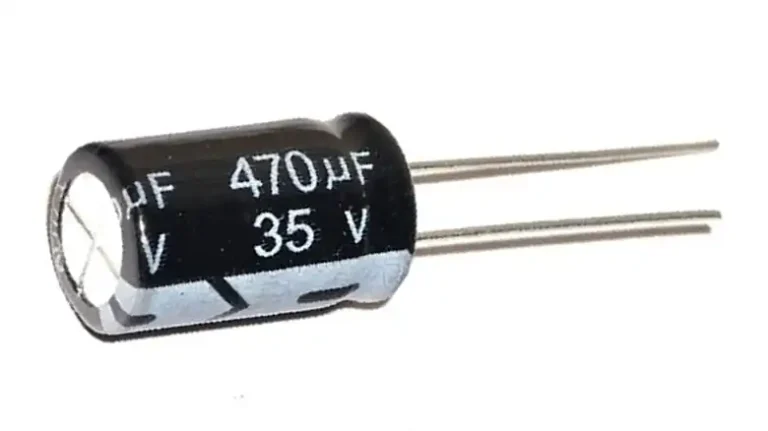
Capacitance. This is the headline number. The IC datasheet or your own math sets it. A pico-farad ceramic trims an RF match. A 470 µF electrolytic holds up a 5 V rail. Same job title, wildly different bodies.
Voltage rating. The trick is to pick a rating 1.5 to 2 times your working voltage. On a 12 V rail I reach for a 25 V part, not a 16 V one. That margin costs a little size, and it buys a lot of reliability. Skimp here and the part cooks. When you are stuck between two ratings, swapping a 25V cap for a 35V one walks through the trade in detail. I’d recommend erring high.
Ripple current. In switch-mode supplies, ripple current heats the capacitor from the inside out. A part rated for 2 A of ripple stays cool where a smaller one bakes. Cooler parts last longer. That is why bigger cans win in power stages. I’ve seen a bargain electrolytic swell and vent because someone ignored this one line on the datasheet.
Temperature and tolerance. A 105 °C part outlives an 85 °C part in the same hot corner of a board. Tolerance matters too. A ±5% cap and a ±20% cap can carry the same marking yet differ in size and price. When that spread actually changes your circuit, I dug into how capacitance tolerance affects a filter.
How I Size a Capacitor on the Bench
Here is my routine. Nothing fancy. It has saved me from a lot of magic smoke.
- Read the datasheet. Find the recommended capacitance and any ESR window.
- Set the voltage rating at 1.5 to 2 times the working voltage.
- Check ripple current if it is a supply. Add headroom.
- Pick the dielectric. C0G for stability, X7R for bulk ceramic, aluminum or polymer for big energy storage.
- Confirm the footprint fits. Lead spacing and can height are real constraints.
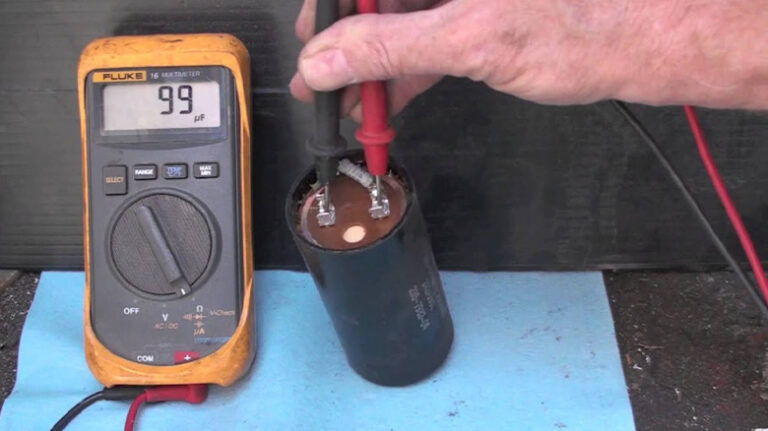
- Prototype, then measure. Scope the rail. Feel the part after 10 minutes.
That last step is the one people skip. Don’t skip it. Ever. A part that runs hot is a part that will fail early, and in practice a ten-minute finger test tells you more about your choice than any spec sheet promise. If you’ve ever chased a supply that died after six months, you already know the feeling. For the failure side of the story, what goes wrong with the wrong-size capacitor covers the safety angles.
Physical fit trips up more builds than you would guess. Radial, axial, SMD, they all eat different board area. Measure twice. Route once. The standard lead spacing chart for capacitors is worth a bookmark before you commit a layout.
Capacitor Sizes by Application
Different jobs want different bodies. A rough map:
- Small (pF to a few nF): RF matching, filtering, and bypass near an IC pin. Think tiny ceramics on an RF stage. They smooth fast voltage wiggles.
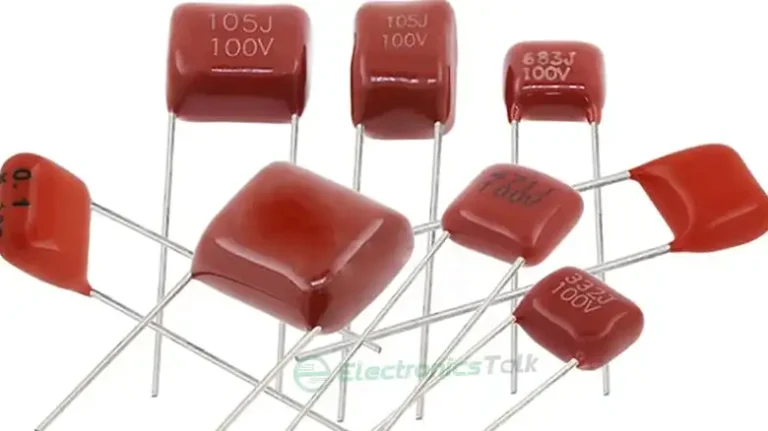
- Medium (nF to tens of µF): timing, decoupling, and light power filtering. MLCCs and small film caps live here.
- Large (hundreds of µF and up): bulk energy storage and voltage hold-up. Aluminum electrolytics in power supplies do this work.
A quick reality check with numbers. A bypass cap near a logic chip might be 100 nF. A bulk cap on the same board might be 1000 µF. That is a 10,000 times spread in value, on one board, doing two different jobs. This is really what people mean when they ask, does size matter in capacitor design.
What About Bigger Being “Safer”?
Not always. I wish it were that simple. Oversizing capacitance in a power filter raises inrush current at power-on, and that surge can nag the rectifier or blow a fuse the moment you flip the switch. In an analog signal path, the wrong value shifts your corner frequency and dulls the response. So does size matter in capacitor reliability here? Only through the specs a bigger can implies. When you treat bulk as a free upgrade, it turns out you have quietly changed the circuit.
Electrolytics also age. The lifespan of electrolytic capacitors leans on temperature and ripple far more than on raw size. Energy itself scales with capacitance and with the square of voltage, per the basic capacitor energy relation. Bigger is a tool. Use it on purpose.
Frequently Asked Questions
Is it better to use a bigger or smaller capacitor?
It depends on the job. Bigger capacitance suits low-frequency energy storage. Smaller values suit high-frequency filtering and bypass. Check the datasheet before you assume bigger is better.
Can I replace a capacitor with a physically larger one?
Often yes, if the capacitance, voltage rating, and footprint still fit the circuit. A larger case with the same value and a higher voltage rating is usually safe. A larger value is not always safe.
Does size matter in capacitor performance, or just capacitance?
Both. Size correlates with voltage rating, ripple handling, and ESR, so two same-value parts of different size can perform differently. Read the specs, not just the can.
Can I use a 7.5 µF capacitor in place of a 5 µF?
Sometimes. In motor-run and similar AC uses it can work, but it changes reactance and current. As capacitance rises, reactance falls and current climbs. Confirm the voltage rating and the application first.
Is a higher µF capacitor always okay?
No. In a power filter a higher value means more inrush current and possible stress. In a signal path it moves the frequency response. Match the value to the design, not to the shelf.
Does a bigger capacitor store more energy?
Usually, yes. Energy scales with capacitance and with the square of voltage. A bigger can often carries a higher voltage rating too, so it can store noticeably more. Size is a decent proxy, not a guarantee.
Bottom Line
So, does size matter in capacitor selection? Yes, but size is a byproduct of the specs, not the goal. Nail capacitance, voltage rating, ripple current, and temperature, and the right physical size falls out on its own. Pick parts by the datasheet, give yourself a voltage margin, and measure the finished board. Do that and size stops being a mystery.