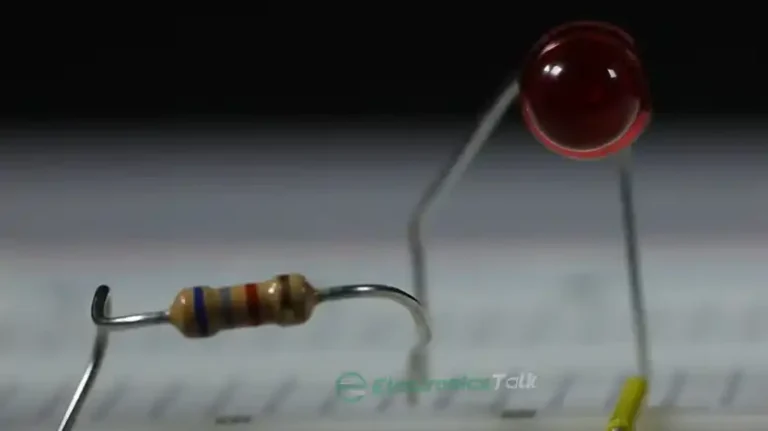
Do Carbon Resistors Go Bad? Signs, Causes, and Fixes
Do carbon resistors go bad? Yes, they do. Carbon resistors are reliable little parts, but they are not immortal. Heat, age, moisture, and rough handling all push their resistance off target, and a few drift far enough to break the circuit they sit in. The good news is simple. Failure is slow, it is predictable, and it is easy to catch once you know what to look for.
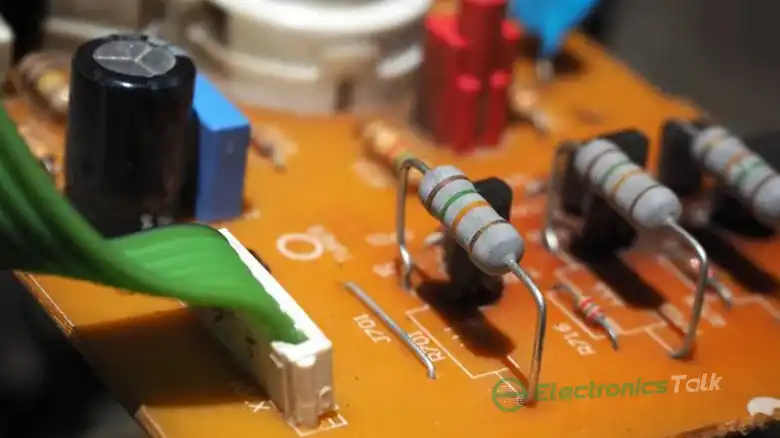
Last updated: August 13, 2026 — rewrote as a definition-first guide, added failure signs, a bench test, and real lifespan numbers.
What Is a Carbon Resistor?
A carbon resistor is a fixed-value resistor built from carbon particles mixed with a ceramic binder and pressed into a small cylinder. The blend sets the value. More carbon, lower resistance. Less carbon, higher resistance. Two wire leads poke out of the ends, and the body gets fired hard to cure it.
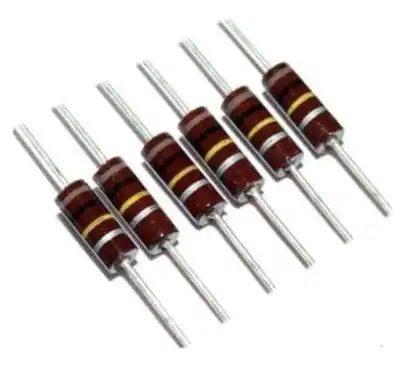
Figure: Carbon Resistors.
The part works by getting in the way of electrons. Push a voltage across it and the current has to shove through the carbon grains. That shoving drops voltage and caps the current. Ohm’s law ties it together:
R = V / I
where R is resistance in ohms, V is the voltage across the part, and I is the current through it. Simple math, and it holds until the part gets hot or old enough to change its own value.
Do Carbon Resistors Go Bad Over Time?
Yes. Time alone is enough to shift one. The carbon-and-binder mix is not perfectly stable. Over years it oxidizes, drinks in a little moisture, and settles, so the marked value creeps. A 1 kΩ part might read 1.05 kΩ after a decade in a warm chassis. That 5% drift means nothing in a pull-up. In a filter or a bias network, it can wreck the design. This is the same reason resistors drift in value over time, and carbon composition is the worst offender of the common types.
The manufacturing helps explain why. Long rods of carbon and ceramic are cut to length, leads are pressed in, and each unit is fired to set it. That process handles short surges well, which is why these parts still show up where a pulse would kill a thin film resistor.
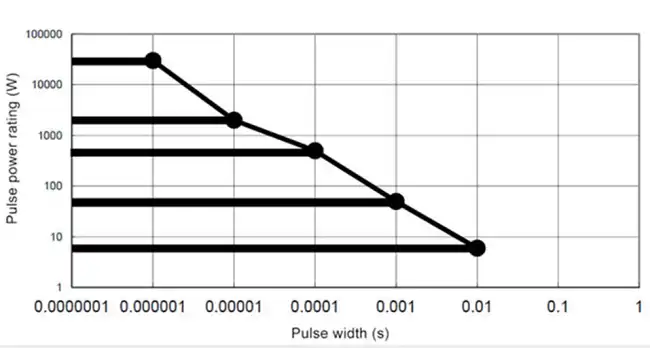
Figure: Carbon Composition Pulse Power Capability
What Makes a Carbon Resistor Fail?
Most bad resistors trace back to one of these five causes. I see the first two far more than the rest.
- Overheating. Run a part past its rated wattage and the carbon cooks. The value shifts, then the part opens. Watch this closely near LEDs, where a small resistor eats real power. Here is how hot an LED resistor really gets and why that heat matters.
- Aging. Slow chemical change nudges the value up or down. A quiet 2% per decade is common. Warm parts age faster.
- Mechanical stress. A dropped board or a bent lead can crack the carbon core. Cracks show up as a value that jumps when you tap the part.
- Moisture. Carbon soaks up humidity. Damp parts read low, wander, or go intermittent.
- Voltage spikes. A transient can punch a hole through the carbon. Remember that every resistor has a voltage limit, not just a power one.
For the full picture on construction and materials, the resistor entry on Wikipedia is a solid reference.
How Long Do Carbon Resistors Last?
Kept inside their limits, they last a long time. Run one at half its rated wattage in a cool box and it will likely outlive the gear around it. Figures of 50,000 hours or more of service are normal for a lightly loaded part. In practice, that stretches to 20 years or beyond on a shelf or in a mild circuit.
Push them hard and the number collapses. A resistor sitting at 95% of its rating in a hot enclosure may drift out of spec in a single season. The rule I trust: every 10°C of extra heat roughly doubles the aging rate. So keep them cool and keep them loafing.
In my experience, the oldest survivors are the least stressed. I have pulled 40-year-old carbon comp resistors out of tube radios that still read within 10% of their color bands. The dead ones almost always sat next to a hot tube or a power resistor.
How Do I Test a Suspect Resistor?
You do not guess. You measure. Here is how I do it on the bench, start to finish.
- Power down and discharge. Kill the supply. Bleed any nearby capacitors before you touch anything.
- Read the color bands. Note the marked value and the tolerance band. Gold is 5%, silver is 10%.
- Lift one leg. In-circuit readings lie, because other parts share the path. Desolder one end so the meter sees only the resistor.
- Measure with a DMM. Set the meter to ohms and read across the part. Let the number settle.
- Compare against tolerance. A 1 kΩ, 5% part should read 950 to 1050 Ω. Outside that window, it drifted.
- Check for open or short. An “OL” reading means open. A near-zero reading means shorted. Both are dead.
Worked example. Say a 4.7 kΩ, 5% resistor reads 5.6 kΩ. The allowed high end is about 4,935 Ω. At 5.6 kΩ it is roughly 19% high, so it is out of spec and the part is bad. Replace it. When I find one like that, I swap in a 1% metal film of the same value and move on.
A burning smell, a scorched body, or a color band you cannot read anymore all point the same way. Trust your nose here. If it smells cooked, it usually is.
How to Prevent Early Failure
Prevention is cheap. A few habits keep carbon resistors honest for decades.
- Run every part well under its wattage rating. Half is a good target.
- Keep boards away from moisture, dust, and corrosive fumes.
- Add heat sinking or airflow anywhere a resistor runs warm to the touch.
- Guard inputs against surges so no single spike cooks the carbon.
If you expect high ambient heat, derate on purpose. The steps are short:
- Find the rated wattage from the datasheet.
- Multiply by 0.5 for a safe working budget.
- Pick the next size up if your load lands above that budget.
Derating is not paranoia. It is the single cheapest way to buy reliability, and it costs you nothing but a slightly bigger part.
Frequently Asked Questions
Can a carbon resistor fail without looking burnt?
Yes, often. Slow aging and moisture shift the value with no scorch marks at all. The only sure test is to lift one leg and measure it against its tolerance band.
Do carbon resistors go bad just sitting in a drawer?
They can. Loose parts still oxidize and absorb humidity, so a 20-year-old drawer stock may read a few percent off. Store them dry and sealed if you care about tight tolerance.
Is a resistor that reads high always bad?
Not always. First confirm you lifted a leg, since in-circuit readings run high because of parallel paths. If it is truly outside its tolerance window, then yes, it is bad.
Should I replace carbon resistors with metal film?
For most repairs, yes. Metal film gives tighter tolerance, lower noise, and better stability. Keep carbon composition only where you need its surge and pulse handling.
How can I tell an open resistor from a shifted one?
An open reads “OL” or infinite ohms on your meter. A shifted part still reads a number, just one outside the marked value and tolerance.
Related Reading
Bottom Line
Do carbon resistors go bad? Yes, and heat plus age drive most of it. Keep them cool, run them under half their rating, and they will hold value for decades. When one drifts or opens, lift a leg, measure it, and drop in a metal film replacement. That is the whole game.