Can I Use 1N4007 Instead of 1N5408? Quick Verdict
Can I use 1N4007 instead of 1N5408? Only if your circuit draws under 1 amp. Both diodes block the same 1000V in reverse, so voltage is never the sticking point. Current is. The 1N4007 is a 1A rectifier. The 1N5408 is a 3A rectifier. Drop the smaller part into a light signal path and nobody notices. Push 3 amps through it and the little 1N4007 overheats fast.
Last updated: August 13, 2026 — added a full spec table, surge-current numbers, a bench rule of thumb, and an expanded FAQ.
Can I Use 1N4007 Instead of 1N5408? The Verdict
Here is the plain version. Match the current first. The 1N5408 is rated for 3 amps of average forward current. The 1N4007 tops out at 1 amp. If your load stays comfortably below that 1A ceiling, the swap works fine. If it climbs toward 2 or 3 amps, it does not.
Voltage is a non-issue. Both parts are 1000V devices, so reverse blocking is identical. The gap that matters is thermal. A bigger diode moves heat away from its junction better than a small one. That is the whole story in two lines.
So, can I use 1N4007 instead of 1N5408 when the current is low? Yes. When it is high? No. My bench rule is short: “match the current rating first, worry about voltage second.”
Spec Table: 1N4007 vs 1N5408
| Spec | 1N4007 | 1N5408 |
|---|---|---|
| Average forward current (IO) | 1 A | 3 A |
| Peak reverse voltage (VRRM) | 1000 V | 1000 V |
| Surge current, one cycle (IFSM) | 30 A | 200 A |
| Forward voltage drop (typical) | ~1.1 V | ~1.0 V |
| Package | DO-41 | DO-201AD |
| Body diameter | ~2.7 mm | ~5.2 mm |
Look at the surge row. The 1N5408 shrugs off 200A for a single half-cycle. The 1N4007 handles 30A. That is roughly 6 times more headroom on the big part. Inrush at power-on is exactly where a cheap diode dies, so this number is not academic. The Vishay 1N4007 datasheet and the 1N5408 datasheet both spell these limits out.
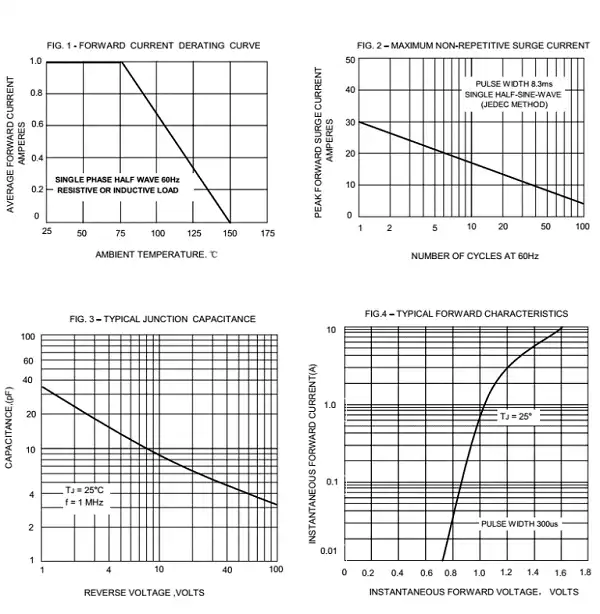
Fig. 1: Characteristic curve of the 1N4007
Where the Swap Is Safe
Some circuits will never feel the difference. Think small.
- LED indicators and signal-level rectification, well under 1A
- Freewheeling diodes across a small relay coil
- Low-current DC blocking or reverse-polarity protection on a light board
- Clamp diodes on a microcontroller pin
In all of those, the current is tiny and the surge is mild. Both the 1N4007 and its 1N400x cousins sail through. If you are already comfortable swapping within that family, my write-up on whether you can use 1N4004 instead of 1N4007 covers the same logic for the smaller siblings.
Where the Swap Fails
Now the danger zone. Follow the current.
- Check the peak load current your rectifier actually passes. Not the average printed on a label. The real peak.
- If that peak stays under about 0.8A with margin, the 1N4007 is fine.
- If it lands between 1A and 3A, keep the 1N5408. No substitution.
- If inrush or motor start-up spikes the current hard, keep the 1N5408 for its 200A surge rating.
- If in doubt, size up. A larger diode never hurts reliability.
Battery chargers, linear supplies feeding a few amps, motor bridges, and speaker protection all live in that 1A-to-3A band. Here the 1N4007 runs hot, drifts, and eventually opens or shorts. I have watched a 1N4007 char its own body brown inside a 2A supply that ran for a week. It was doing the job of a 3A part it was never built for. Heat is patient. It wins.
Why Current, Not Voltage, Decides It
People fixate on the 1000V rating because it looks impressive. It rarely bites. Most hobby and repair circuits never approach 1000V of reverse stress, so both diodes have voltage to spare. The forward current path is different. Every amp you push generates heat at the junction, and the junction has to dump that heat through the leads and the plastic body into the air.
The 1N5408 has more copper, more silicon, and a body over 5.2 mm across. It spreads and sheds heat. The 1N4007, at roughly 2.7 mm, has less thermal mass and a smaller surface. Run both at 2 amps and the small one climbs past its safe junction temperature while the big one stays warm but happy. When a diode overheats, its forward drop wanders and its leakage climbs, and the failure feeds on itself. If you want the deeper mechanism, I broke it down in this guide on how diodes can overheat.
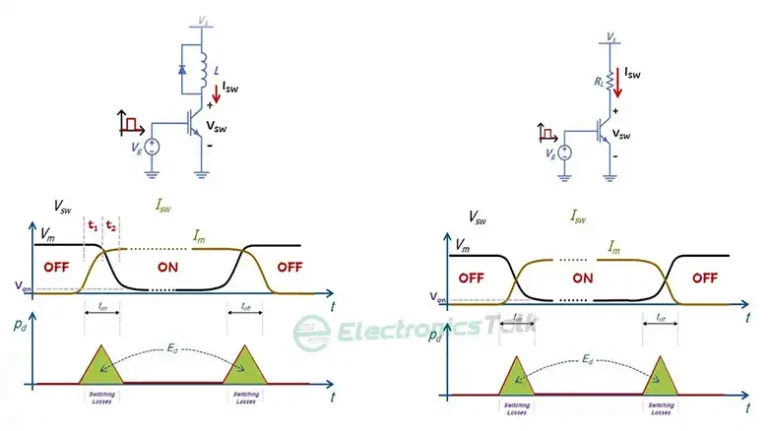
There is a second-order effect too. Recovery behavior and conduction loss both shift with load, and a stressed part gets worse across the board. If that rabbit hole interests you, the notes on switching losses in diodes go further than most people need.
How I Test a Swap on the Bench
When I am unsure, I do not guess. I measure.
Wire the candidate diode in. Load the circuit to its real working current. Let it run for ten minutes. Then touch the diode body, or better, read it with an IR thermometer. If it sits under about 70% of its rated temperature rise, I trust it. If it is too hot to hold, the part is undersized and I move up. In my experience that ten-minute soak catches almost every bad substitution before it ships.
One more habit. I derate. I never run a diode at 100% of its rating on paper. I aim for 50% to 70% headroom on current, because ambient heat, poor airflow, and aging all eat into the margin over years of service. A part that squeaks by on the bench can still fail in a hot enclosure two summers later.
1N4007 and 1N5408 in Context
The 1N4007 has been the default 1A general-purpose rectifier for over 40 years. It is cheap, everywhere, and rated to 1000V, which is why it shows up in almost every repair drawer. The 1N5408 is its heavier cousin, built for 3A jobs in the same 1000V class. You can read the shared family history on the 1N400x general-purpose diode reference.
Neither part is fast. Both are standard-recovery silicon, so keep them out of high-frequency switching supplies where a fast or Schottky diode belongs. For plain 50/60Hz rectification, they are workhorses. The choice between them comes down to that one current number, every single time.
Frequently Asked Questions
Can I use 1N4007 instead of 1N5408 in a power supply?
Only if the supply draws under 1 amp. A 3A supply needs the 1N5408 or a bigger diode. The 1N4007 will overheat and fail in a higher-current rail.
Will the 1N4007 blow up right away if I use it at 3 amps?
Not always instantly. It runs hot, drifts, and usually fails within hours to days. Sometimes it opens, sometimes it shorts. Either way, do not count on it.
Do the two diodes have the same voltage rating?
Yes. Both are rated at 1000V peak reverse voltage (VRRM), so reverse blocking is identical. Current, not voltage, is the deciding spec.
Can I put two 1N4007 diodes in parallel to get 3 amps?
I would not. Diodes do not share current evenly because their forward drops differ slightly, so one hogs the load and cooks. Use a single 1N5408 instead.
Is the 1N5408 always a safe upgrade over the 1N4007?
For most 50/60Hz rectifier slots, yes. It matches the 1000V rating and adds current headroom. Just confirm the bigger DO-201AD body and longer leads fit your board.
What about swapping within the smaller 1N400x family?
That is usually painless because the current ratings match. The difference is only reverse voltage. I cover the exact case of moving between a 1N4007 and a 1N4003 in a separate post.
Related Reading
Bottom Line
Can I use 1N4007 instead of 1N5408? Yes below 1 amp, no above it. The two diodes share a 1000V reverse rating, but the 1N5408 carries 3A and survives a 200A surge while the 1N4007 tops out at 1A and 30A. Match the current, leave margin, and when the load pushes past an amp, reach for the bigger part.