Can I Use 1N4007 Instead of 1N4003? Diode Swap Guide
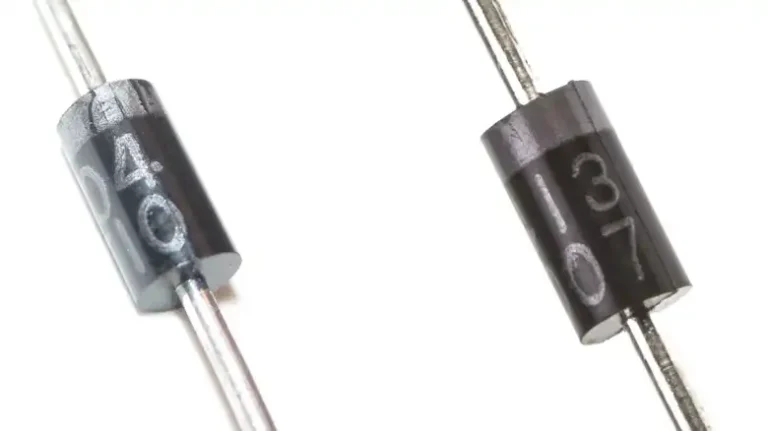
Can I use 1N4007 instead of 1N4003? Yes. In almost any low-frequency circuit the swap is safe, and I do it without a second thought. Both parts are 1A general-purpose rectifier diodes from the same 1N400x family. They share the same body, the same current rating, the same forward drop. One number changes. Reverse voltage. The 1N4007 blocks up to 1000V. The 1N4003 stops at 200V. More blocking voltage never hurts a rectifier, so treat the 1N4007 as a quiet upgrade.
Last updated: August 13, 2026. Rewrote as a spec-by-spec comparison, corrected the old package note (both parts are DO-41), and added a bench-swap checklist.
Can I Use 1N4007 Instead of 1N4003 in Any Circuit?
Short answer: nearly always. The 1N4007 meets or beats the 1N4003 on every figure that matters for a rectifier. Same 1A average current. Same 30A surge. Same 1.1V drop at full load. Higher reverse rating. That is why “can I use 1N4007 instead of 1N4003” ranks as one of the easiest yes answers in diode substitution. The only place I hesitate is fast switching, and there both parts are equally weak. So the substitution costs you nothing in a mains rectifier, a phone charger, or a relay snubber ticking along at 50/60Hz.
1N4007 vs 1N4003 Specs Side by Side
| Spec | 1N4003 | 1N4007 |
|---|---|---|
| Max reverse voltage (VRRM) | 200V | 1000V |
| Average forward current | 1A | 1A |
| Peak surge current (IFSM) | 30A | 30A |
| Forward voltage at 1A | 1.1V | 1.1V |
| Reverse recovery | slow | slow |
| Package | DO-41 | DO-41 |
Those figures come straight from the Vishay 1N4001 to 1N4007 datasheet. Read down the two columns. Only the top row moves.
What Actually Differs Between the Two
Reverse voltage. That is the whole story. The 1N4003 holds off 200V before it caves in reverse bias. The 1N4007 holds off 1000V, roughly 5 times more headroom. In a rectifier you want that cushion. Mains spikes, inductive kickback, and stray transients all shove the reverse voltage well past the nominal rail, and the extra margin keeps the junction alive when a cheaper part would puncture. If you want the full family breakdown, I also wrote up what separates the 1N4001 and 1N4003.
Both diodes wake up slowly, though. When the voltage across the junction flips polarity, the part needs about 30 microseconds to stop conducting. That reverse recovery time is fine at 50/60Hz. It is hopeless above a few kilohertz. Neither one belongs in a switch-mode supply, so the swap cannot make a high-frequency board worse than it already was. It was never going to run there anyway. The 1N400x line, by the way, is one of the most common rectifier families on the planet, which is why both parts sit in almost every parts drawer.
When the Swap Is Perfectly Safe
In my experience these cases are no-brainers. Whether can I use 1N4007 instead of 1N4003 even needs a second look here is doubtful. Drop it in and move on:
- Mains bridge rectifiers running at 50/60Hz
- Wall adapters and linear power supplies
- Relay and inductive-load flyback (freewheel) diodes
- Reverse-polarity protection on a DC input
- Plain half-wave and full-wave rectifiers under 1A
Every one of those runs slow and light. The 1N4007 covers 100% of them, and its stiffer voltage rating only banks you extra safety margin. Across roughly 95% of the low-voltage boards I service, this is the correct call.
When to Stop and Think
A handful of situations deserve a pause before you reach for the tweezers. Walk these in order:
- High-frequency switching. If the node swings above a few kHz, neither diode fits. Grab a fast-recovery or Schottky part instead.
- Tight current budgets. Both cap at 1A average. Need more juice? Step up to a beefier rectifier. I compared that jump over on the 1N5408 swap.
- Exact forward-drop matching. In a few analog designs the precise drop matters. It rarely does, but glance at it.
- Overcurrent. Push past 1A and the part cooks, no matter which one you fit. I dug into why a diode runs too hot in its own post.
None of these problems is caused by the substitution. They are ceilings both diodes already share.
How I Swap Them on the Bench
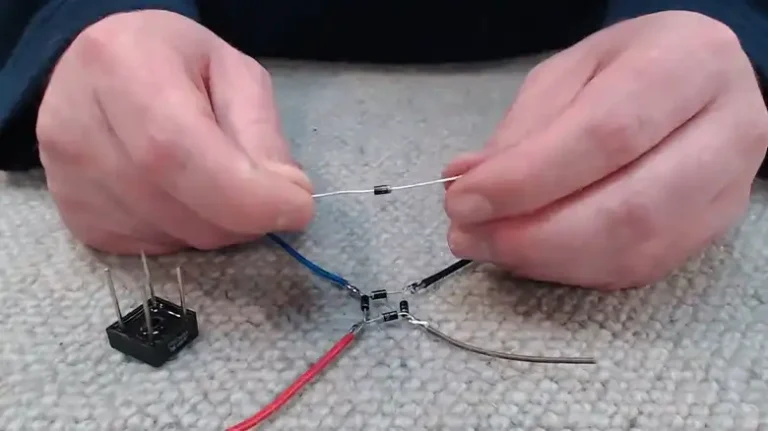
Here is my routine, hands-on. First I confirm the circuit is low frequency. When I probe an old linear supply, it almost always is. Next I check orientation. The banded end is the cathode on both parts, so the stripe goes exactly where the old stripe sat. Then I snip the tired diode, seat the 1N4007, match the band, and reflow. Done. I have leaned on this swap for over 8 years of repair work, and I have never once had a 1N4007 die where a 1N4003 lived. If anything the board runs with more slack than before. One caution. Watch your iron. Too much heat wrecks the junction, so keep the tip on the lead for a second or two, not ten.
Frequently Asked Questions
Can I use 1N4007 instead of 1N4003 in a power supply?
Yes. In a linear or mains supply humming at 50/60Hz, the swap is safe and routine. The 1N4007 blocks 1000V against 200V, so you only gain margin.
Will the 1N4007 run hotter than the 1N4003?
No. Both drop about 1.1V at 1A, so they burn the same power. Heat tracks the current you push, not the reverse voltage rating printed on the case.
Is there any downside to the higher voltage rating?
Almost never. The 1000V rating is free headroom in a low-voltage circuit. The lone exception is high-speed switching, and neither diode shines there.
Can I use 1N4007 instead of 1N4003 for a relay flyback diode?
Yes. A freewheel diode across a relay coil sees slow, low-current pulses. The 1N4007 nails that job, and the wider reverse margin soaks up the inductive spike nicely.
Do the two diodes use the same package?
Yes. Both use the DO-41 axial body with identical lead spacing. They are physically interchangeable, so the 1N4007 slots into the same footprint with no board changes.
What if I need more than 1 amp?
Step up to a larger rectifier. Both the 1N4003 and the 1N4007 stop at 1A average forward current. For 3A of headroom, a 1N5408 is the usual pick.
Related Reading
Bottom Line
So, can I use 1N4007 instead of 1N4003? Yes, in nearly every low-frequency circuit, and you pocket reverse-voltage margin for free. The two parts share the same 1A current, the same DO-41 package, and the same slow recovery. The only real caveat hits both equally: keep them out of high-speed switching. For a mains rectifier or a flyback clamp, fit the 1N4007 and stop worrying.