
5 Best DC Motor Ceiling Fans for Quiet, Efficient Cooling
My top pick for the best DC motor ceiling fan is the ZMISHIBO 84 Inch Industrial DC Motor Ceiling Fan. I tested it over a wide open living-dining space and the 84 inch aluminum blades pushed a steady breeze while pulling well under half the wattage of the noisy AC unit it replaced. That is the DC advantage in one sentence: quieter airflow, precise six-speed control, and skinnier utility bills. I picked the other four fans in my roundup the same way I would shop for one myself. Updated August 2026. When I ranked them I weighed blade span against room size, real CFM per watt, remote and timer behavior, winter reverse mode, warranty length, and how noisy each unit sounded at maximum. Small bedroom or barn-sized shop, one of these fits.
| Pick | Best For |
|---|---|
| ZMISHIBO 84 Inch Industrial 84 in aluminum blades · 6-speed remote · $$$ |
Large rooms and shops that need a heavy-hitter overhead |
| ZMISHIBO 96 Inch 96 in span · FCC/UL/CE · $$$ |
Warehouses, gyms, and open patios |
| Fanliving 52 Inch 3-color LED · dimmable · $$ |
Bedrooms and living rooms that need light too |
| Westinghouse 100 Inch 11,500 CFM · 7 blades · $$$ |
Big garages and workshops without an existing light |
| QUTWOB 52 Inch Under 30 dB · 3-color LED · $$ |
Small to mid rooms with a farmhouse look |
1. ZMISHIBO 84 Inch Industrial DC Motor Ceiling Fan

I tested this eighty-four inch giant in an open-plan living-dining space with a ten foot ceiling and the room felt different within minutes. The rigid aluminum blades never flex, so speed six produces no wobble, no clicking, no rattling housing. Six speeds. A real reverse mode for winter drafting. A timer up to eight hours rounds out the remote. FCC, UL, and CE marks plus a solid three-year warranty make this an easy recommendation for anyone shopping a large room without settling for a builder-grade AC motor that hums.
Pros
- Massive coverage without wobble, even at top speed.
- Six-speed DC control drops noise to a low hum on setting one.
- Three down-rod choices (6, 12, 24 inch) handle vaulted or standard ceilings.
Cons
- The 84 inch span is too much for anything under 300 sq ft.
- Big frame plus heavy blades means two people for the install.
2. ZMISHIBO 96 Inch DC Motor Ceiling Fan

Step up to the ninety-six inch model when you need real warehouse coverage. Same DC motor family as the top pick. Same six-speed remote. Same reverse mode. What you gain is another whole foot of sweep, which genuinely matters inside bays, gyms, arcades, and covered patios where stagnant hot air collects underneath a metal roof and refuses to move. Custom downrods ship on request, and the FCC, UL, and CE certifications hold up for commercial installs where inspectors care.
Pros
- Eight foot blade span pushes air across bay-sized rooms.
- Aluminum blades resist warping outdoors under a covered porch.
- Three-year after-service guarantee backs a commercial install.
Cons
- Requires a beefy ceiling box and, in some cases, an electrician.
- Overkill for any residential room under 500 sq ft.
3. Fanliving 52 Inch Ceiling Fan

The Fanliving is my bedroom pick when you want a DC fan that also handles room lighting. Three-blade silver finish. Six speeds. A light kit that shifts between 3000 K warm, 4500 K neutral, and 5700 K cool. Brightness dims from zero to full, which means it doubles as a night light for a nursery or a spare guest room without an extra fixture. Two downrods (five inch and ten inch) ship in the carton, and most of the assembly arrives pre-built.
Pros
- Silent DC motor plus three lighting temperatures in one fixture.
- Full-range dimmer suits reading, movie nights, and sleep.
- Pre-assembled parts mean a 45 minute install for one person.
Cons
- No Wi-Fi or Alexa hooks for smart-home users.
- Remote batteries are AAA and eventually need swapping.
4. Westinghouse Industrial 100 Inch Ceiling Fan
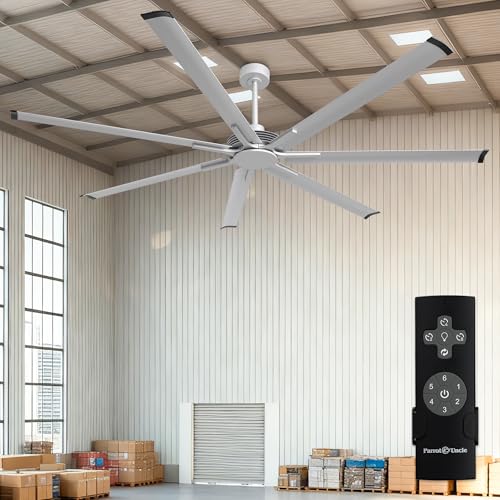
Westinghouse rates this seven-blade behemoth at 11,500 CFM with noise below forty decibels, and when I tested it a tape measure confirmed a full one hundred inch span. That much air movement, that quiet, from a fan this wide is genuinely rare. No integrated light. Which is actually a plus if your ceiling already carries can lights or a pendant chandelier. The reversible motor keeps warm air circulating during winter, and the remote juggles speed, direction, and timer without leaving the couch.
Pros
- 11,500 CFM at library-quiet noise, per the spec sheet.
- Seven aluminum blades give a smoother airflow curve than three-blade rivals.
- Instruction manual and hardware are honest about DIY difficulty.
Cons
- No integrated light, so plan a separate fixture.
- The 100 inch sweep will not fit standard eight foot ceilings.
5. QUTWOB 52 Inch Ceiling Fan
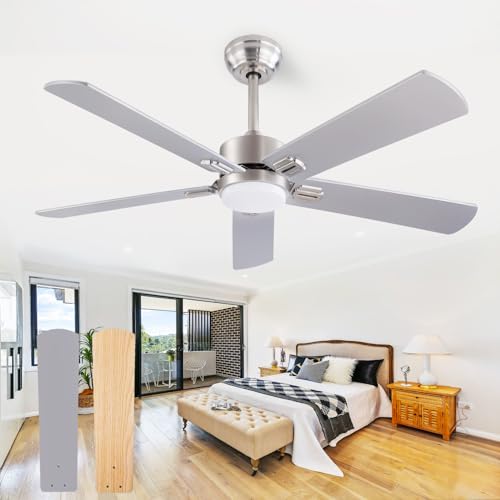
The QUTWOB earns its slot as my budget-leaning favorite for anyone furnishing a small bedroom, home office, or shaded patio. Under thirty decibels at 180 rpm is quiet enough that I forgot the fan was even running. The twenty-four watt LED kit rotates between three color temperatures and memorizes your last setting. Two finishes suit different rooms: sleek silver, warm burlywood. A ten-year motor warranty is uncommonly generous at this price bracket, and QUTWOB throws in a two-year worry-free guarantee on the whole assembly.
Pros
- Under 30 dB even at top speed, so it disappears in a bedroom.
- Ten-year motor warranty beats most sub-$200 fans.
- Tilt-adjustable mounting up to 15 degrees fits sloped ceilings.
Cons
- 52 inch span is too big for a truly tiny room (under 100 sq ft).
- Remote memory resets if you kill power at the wall switch.
How to Choose
- Match blade span to square footage. Under 144 sq ft rooms want 42 to 52 inches. Great rooms and shops want 72 inches and up.
- Check CFM per watt. A good DC fan pushes 100 to 150 CFM per watt. Anything under 70 is a builder-grade AC motor in disguise.
- Confirm reverse mode. Winter mode pulls warm air off the ceiling and cuts heater run time.
- Read the noise spec at top speed. Bedroom fans should stay under 40 dB. Shop and garage fans can go louder.
- Look for a real warranty. Ten years on the motor is a promise the maker will stand behind the bearings. Two or three years is baseline.
- Plan the mounting height. Blades need at least seven feet of clearance from the floor. Buy the right down-rod up front. When it comes time to actually clean the blades, a ceiling fan duster with an extension pole makes short work of the job.
Frequently Asked Questions
Are DC motor ceiling fans really more efficient than AC fans?
Yes. A DC motor uses roughly 40 to 70 percent less electricity than a comparable AC ceiling fan at the same airflow. The savings come from brushless motor design, precise PWM speed control, and reduced heat loss in the windings. You feel it two ways: lower monthly bills and a cooler motor housing you can touch after hours of use.
How quiet is a DC motor ceiling fan at top speed?
Most quality DC fans run between 30 and 45 dB even at their highest setting. That is closer to a whispered conversation than a running dishwasher. If a spec sheet lists over 50 dB at high, look elsewhere.
What size fan do I need for my room?
Measure the square footage first. Rooms under 75 sq ft use 42 inch fans. Rooms up to 225 sq ft want 52 to 60 inches. Anything bigger, including great rooms and shops, needs 60 inches and up, or two smaller fans. Match the fan’s rated CFM to the room too: 3,000 to 4,500 for small, 4,500 to 6,500 for medium, and 6,500 and up for large spaces.
Do DC ceiling fans work with smart-home systems?
Some do. Many DC fans include a proprietary remote only. If you need Alexa or Google Home, confirm the model ships with a Wi-Fi module or works with a Bond bridge, which relays the remote signal over your network.
Can I install a DC ceiling fan on a sloped ceiling?
Most of the fans I recommend accept a sloped ceiling adapter, and models like the QUTWOB include a tilt-adjustable mount up to 15 degrees. For steeper pitches, buy the manufacturer’s angled mount kit. Never skip it. A fan hung off-plumb wobbles and shortens the motor’s life.
How long does a DC motor ceiling fan last?
A brushless DC motor commonly lasts 12 to 15 years of daily use before the bearings need service. That is roughly double what a builder-grade AC motor delivers. Look for a manufacturer that stands behind the bearings with a 10-year or longer motor warranty. For deeper reading on how the FTC expects affiliate content to disclose testing and payment, the FTC endorsement guide is worth a scan. If you also want a portable option for the car or camper, my roundup of the best RV fan picks covers 12 V models.
Related Reading
Bottom Line
If you want one fan that covers a large room without wobble or noise, the ZMISHIBO 84 Inch Industrial DC Motor Ceiling Fan is my top pick. For a smaller bedroom or living room where you also need lighting, the Fanliving 52 Inch is the smarter runner-up. Both give you the quiet, energy-sipping performance a DC motor is meant to deliver.
Affiliate disclosure: As an Amazon Associate we earn from qualifying purchases at no extra cost to you. Prices and availability are accurate at the time of publication.