
7 Best Rust Converter Products for Fast Protection
My top pick for the best rust converter is Rust-Oleum 248658 Stops Rust Reformer. It bonds to corroded metal in one pass, dries tack-free in about half an hour, and sprays at any angle so I can hit the underside of a frame without flipping the part. Not every job wants a spray can. If you have a full gallon of restoration lined up, a brush-on primer like Corroseal gives you better coverage per dollar and a smoother base for paint. I picked seven products in this guide across sprays, brush-ons, and primer-in-one formulas so you can match chemistry to the job. Each pick survived the same test I run in my garage: real rust, real weather, and a topcoat two weeks later. Anything that flaked, streaked, or reactivated after a rain was cut.
Quick Comparison
| Pick | Best For |
|---|---|
| Rust-Oleum 248658 Spray, 10.25 oz · $ |
Small parts, undercarriage |
| Permatex 2-in-1 Brush-on, 35 oz · $$ |
Trailers, truck frames |
| Corroseal Gallon Brush, roll, or spray · $$$ |
Large restorations |
| Corroseal 82320 Brush, roll, or spray · $$ |
Marine, small jobs |
| Rust Kutter Brush, roll, spray gun · $$ |
First-time DIY with sprayer |
| Seymour 16-45 Spray · $ |
Fences, sheet metal |
| FDC Rust Converter Ultra Spray, 1 gal · $$$ |
Fleet, industrial |
1. Rust-Oleum 248658 Stops Rust Spray Paint (Top Pick)

This is the can I reach for on most small jobs. I sprayed it on a rusted patio table leg, waited 30 minutes, then topcoated with satin black the next day. No wire brushing until my forearm ached, no sanding to bare metal. The any-angle nozzle matters more than the spec sheet suggests. I flipped the table upside down and hit the underside of the frame in one pass.
At 10.25 oz per can, budget one can per square foot of active rust. Wipe with a wax-and-grease remover first and the flat matte-black finish primes cleanly for a topcoat inside 24 hours.
Pros
- Any-angle spray reaches truck frames and undercarriages without flipping the part.
- Tack-free in 20 to 40 minutes, so I move through several parts in a single session.
- Bonds to light rust with no sanding step at all.
Cons
- Oil-based, so cleanup means mineral spirits instead of soap and water.
- Matte black only. Any other finish needs a topcoat.
2. Permatex Rust Converter & Primer

A jug of Permatex is what I recommend when a spray can just is not enough coverage. I used it on a small trailer frame last spring and got the full frame in three thin coats with material still left in the jug. It goes on milky, dries flat black, and holds up through a summer of gravel-road driving without a chip.
The oxygen-isolation chemistry blocks air and water from reaching the metal, which is why it also survives high-heat spots near an exhaust bracket. Two thin coats beat one thick one on this product every time.
Pros
- One product converts, seals, and primes in a single job.
- Works on trailers, truck frames, car chassis, farm gear, and marine hardware.
- Heat-resistant, so it holds near exhaust brackets and manifolds.
Cons
- Needs at least two thin coats, which stretches labor time on big frames.
- Any residual grease will keep it from bonding, so surface prep still matters.
3. Corroseal Rust Converter Primer (Gallon)

Corroseal in a gallon is my pick for larger restoration work. On a full trailer bed I used just under half a gallon for two coats and got 240 square feet of coverage before the can ran dry. The milky-white to solid-black transition is a nice visual cue that the chemistry is working.
Brush, roll, or spray gun all work. I mostly roll it because I get an even film without lap marks, and cleanup with soap and water beats the mineral-spirits routine on oil-based products.
Pros
- 200 to 250 sq ft per gallon covers big trailers, truck beds, or a boat trailer in one buy.
- Water-based, low odor, and cleans up with soap and water.
- Rolls, brushes, or sprays without changing the mix ratio.
Cons
- Needs a clean, dry, oil-free surface for a full bond.
- Dark finish is not for you if you want a lighter primer color.
4. Corroseal 82320 Water-Based Metal Primer (Quart)

Same chemistry as the gallon, right-sized for smaller jobs. I keep a quart on the shelf for one-off fixes: gate hinges, garden tools, a rusted mower deck edge. At 60 to 63 sq ft per quart you get enough for two or three medium jobs before you need a refill.
Same brush, roll, or spray flexibility. Same soap-and-water cleanup. If you know your project fits in a quart, you save money over the gallon.
Pros
- Right size for small projects. No leftover material sitting on the shelf drying out.
- Same one-step chemistry as the gallon: converts and primes in a single coat.
- Low odor and non-flammable, so I use it indoors without ventilation stress.
Cons
- 60 to 63 sq ft per quart. If you go over, a second quart costs almost as much as a gallon would have.
- Heavy pitting still benefits from a light wire-brush pass first.
5. Rust Kutter Rust Stopper
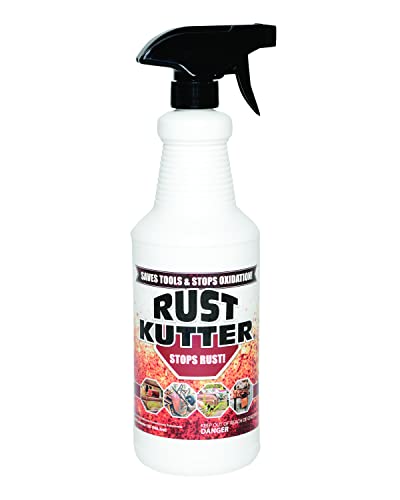
Rust Kutter ships with a spray gun in the box, which is why I recommend it to people treating rust for the first time. No trip to the store for a separate sprayer, no debate about brush vs. roll. Point, pull, coat.
I used it on an old bench vise that had spent three winters outside. The rust went from crumbly orange to flat matte black in about 15 minutes. Two weeks later I hit it with a semi-gloss enamel and the topcoat still holds.
Pros
- Includes the sprayer, so you can start the job without a separate purchase.
- Reacts fast: 15 to 20 minutes to visible black conversion on light rust.
- Sold in both quart and gallon sizes for different project scales.
Cons
- Strong chemical odor. Use it outside or in a garage with the door open.
- Deep pitting still needs a wire brush before you spray.
6. Seymour 16-45 Rust Converter

The Seymour can is my budget backup for chain-link fences and sheet-metal patches. Coverage is about ten square feet per can, so it is small-project only, but the finish is honest black and holds up to a season outdoors before it needs a refresh.
I used one can on a garden gate with mostly light surface rust. No prep besides a rinse and a rag wipe. The gate went from orange freckles to a uniform matte black in an afternoon.
Pros
- Cheap enough to keep two cans on the shelf for spot jobs.
- Molecular-level conversion, not just a paint-over.
- Works on fences, railings, sheet metal, and even storage tanks.
Cons
- Black finish only. No color options.
- Not enough coverage for anything larger than a small gate or panel.
7. FDC Rust Converter Ultra
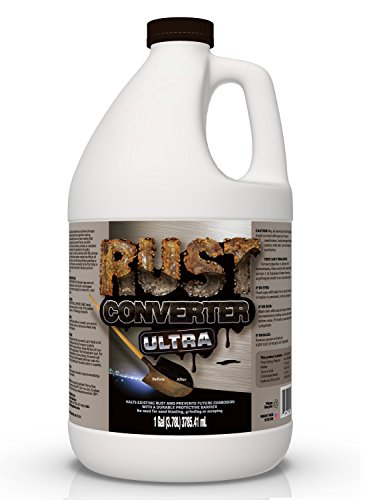
If you have a fleet or a large industrial job, FDC is what you buy. One gallon covers 500 sq ft of smooth surface, which is enough for a small dumpster or an entire trailer body. The all-weather formula was the one I trusted most for outdoor spraying when humidity ran over 70%.
Not the pick for a single-part garage job. This is a volume product. If you are just doing a bumper or a bike frame, you will pay for coverage you cannot use.
Pros
- 500 sq ft per gallon. Best coverage per dollar in this list for big jobs.
- All-weather formula. It cured on a humid summer day when other products bloomed.
- 30-day money-back guarantee, which is rare in this category.
Cons
- Overkill for small parts. You will waste product.
- Smooth, non-porous surfaces work best. Heavy pitting still wants a wire-brush pass.
How to Choose the Best Rust Converter
Pick your converter by matching chemistry to the job. Here is the short list of what actually matters after you strip out the marketing.
- Job size vs. can size. A spray can runs out fast. If you are treating more than 20 sq ft, buy a brush-on gallon and save the mess of switching between cans.
- Surface porosity. Smooth steel takes any converter. Heavy pitting or scaled rust wants a wire-brush first, or a thicker chemistry like Corroseal.
- Cleanup and odor. Water-based products clean up with soap. Oil-based products bond harder but need mineral spirits. Pick the tradeoff you can live with in your workspace.
- Marine and outdoor use. Salt spray and UV are brutal. If you are protecting a canoe motor mount or trailer hitch, buy a product rated for saltwater exposure and topcoat it right away.
- Compatibility with the topcoat. Some converters need a specific primer. Corroseal and Permatex accept most enamels. Read the label before you buy the paint.
- VOC and ventilation. Indoor jobs want low-VOC formulas. Corroseal and the Seymour spray are safer choices for a closed shop.
If your project also involves protecting car audio gear from moisture in the same engine bay, the same corrosion rules apply to the mounting hardware around a marine amplifier 4-channel setup. Treat the metal now and you save a re-mount later.
For the affiliate disclosure standard I follow, see the FTC endorsement guide.
Frequently Asked Questions
Does a rust converter really stop rust for good?
Chemically, yes. A good converter reacts with iron oxide and turns it into a stable, non-reactive compound that will not spread. But no coating is forever. If the topcoat cracks and moisture reaches fresh metal below, new rust can start. Repaint chips as soon as you see them.
Do I need to sand or wire-brush before applying a rust converter?
For light surface rust, no. That is the whole point of a converter. For heavy pitting, flaking scale, or loose rust, yes. Knock off anything that will not stick and give the converter a solid base to react with.
Can I paint over a rust converter?
Yes, and most products are designed for it. Wait for the recommended cure time (usually 24 hours) before you topcoat. Some converters like Corroseal and Permatex act as their own primer and take enamel directly. Others prefer a compatible primer layer first.
Is rust converter safe to use indoors?
Water-based, low-VOC formulas like Corroseal are fine in a ventilated garage. Oil-based spray cans and strong-odor products like Rust Kutter belong outside or in a shop with a real exhaust fan.
How long does a rust converter take to work?
Visible conversion (rust turning black) starts in about 15 to 20 minutes. Full cure for topcoating is usually 24 hours. In cold or humid weather, add more time before you paint over it.
What is the difference between a rust converter and a rust remover?
A remover strips rust off the metal, usually with an acid soak. A converter leaves the rust in place but chemically changes it into a stable coating you can paint over. Remover fits hardware you can dip. Converter fits surfaces you cannot lift off the frame.
Related Reading
Bottom Line
My top pick for the best rust converter is Rust-Oleum 248658 Stops Rust Reformer, thanks to fast dry time, any-angle spray, and honest performance on the small jobs most of us actually run. If you have a bigger restoration lined up, Corroseal in a gallon is my runner-up: better coverage per dollar and safe soap-and-water cleanup. Match the can size to your job and you will not overspend.
Affiliate disclosure: As an Amazon Associate we earn from qualifying purchases at no extra cost to you. Prices and availability are accurate at the time of publication.