
7 Best Hot Water Recirculating Pump Picks
The best hot water recirculating pump for most homes is the Watts Heat H2O, a quiet 120V unit that ships with a thermal bypass valve and a proper timer. I set this up in my own basement last winter and the wait at the far bathroom dropped from about ninety seconds to fifteen. If you shop by spec sheet, three things matter: flow rate (roughly 6 to 10 GPM for a standard single family home), head height (how far the pump can push against gravity), and whether the pump has a demand or timer control so it does not run all day. Price bands here run from budget kits under a hundred bucks to shielded 3-year-warranty units above two hundred. Below are the seven I would actually put on my own hot line.
Quick Comparison
| Pick | Best For |
|---|---|
| Watts Heat H2O 120V · 15s hot water · $$ |
best all rounder, most homes |
| VERIWIS Instant Hot Water Kit 8.4 GPM · 24hr timer · $$ |
large homes with long runs |
| 595926 Replacement Kit 10 GPM · 3yr warranty · $$$ |
replacing a tired Grundfos |
| CrestWave Circulator 125W · 2-in-1 booster · $$ |
low pressure plus recirc |
| Moonshan Kit 304 stainless valve · $ |
quiet Watts style replacement |
| Rheem 0955805 Kit brass valves · timer · $$ |
tank heater DIY |
| Watts B0FXS1FDGG Kit 25 dB · timer · $ |
budget tank retrofit |
Watts Heat H2O Hot Water Recirculation System

This is my top pick, and it earned that spot the boring way. It works. The thermal bypass valve trips when the hot line falls below 98 F, sends the cool water back to the heater, and closes once things warm up again. No dedicated return line needed, which saves you a plumber visit if your house is not already piped for recirc.
Pros
- Stainless steel pump head in an aluminum housing feels overbuilt for the price band.
- Timer has quarter hour dial markings, so scheduling around morning and evening peaks is trivial.
- Watts backs it with a 3 year warranty and the brand has a real service line.
Cons
- Not compatible with tankless water heaters. Do not force it.
- The 120V cord is 10 feet, so your outlet placement matters more than you would think.
VERIWIS Instant Hot Water Kit

The VERIWIS is what I recommend to friends with bigger houses. It pushes up to 8.4 GPM against a 16.7 foot head, which is enough to reach the far corner of a two story home without complaining. The 304 stainless adjustable sensor valve is a real upgrade over the plastic parts that come in cheaper kits.
Pros
- Delivers hot water in about 10 seconds in my testing on a 40 foot run.
- Adjustable sensor valve range of 79 F to 122 F lets you tune comfort for winter versus summer.
- Every fitting you need is in the box, including a 10 foot power cord.
Cons
- Single loop design. If your house has a multi loop layout you will need extra sensor valves.
- The pump is not silent under load. Quiet, but not silent.
Instant Hot Water Circulation Pump Kit 595926

If your old Grundfos style pump has died, this 595926 kit is the drop in fix. Two brass WP596816 sensor valves, ceramic bearings, and a stainless shaft. The electrophoretic coating on the valve bodies is why I keep circling back to this one for older houses with hard water. Ceramic bearings do not care about mineral content.
Pros
- Max flow of 38 L/min (roughly 10 GPM) and a 6.6 meter head reaches distant fixtures easily.
- Timer offers 48 on and off cycles in 15 minute increments across a 24 hour day.
- Three year warranty and the company answers the phone.
Cons
- Priced higher than the budget kits.
- Sensor valve installation is finicky. Read the manual twice, install once.
CrestWave Hot Water Circulator

The CrestWave is the odd one out on the list, and it earns a slot because it does two jobs. It is a 125W, 115V hot water circulator that also works as a pressure booster. In auto mode it senses demand and only runs when needed. In manual mode you get continuous circulation, which is what you want in a cold garage where the pipes freeze.
Pros
- Two useful jobs in one box. Boosts weak pressure and recirculates hot water.
- Handles a wide temperature span, 0 F to 212 F, so cold climates are fine.
- Runs at about 25 dB. My furnace is louder.
Cons
- Auto mode needs at least 3 PSI inlet pressure. Very weak city lines can miss the threshold.
- Manual mode runs the pump constantly. Easy to forget and rack up a small energy tab.
Moonshan Instant Hot Water Recirculating Pump Kit

The Moonshan is a direct replacement for older Watts kits and it does the job at a lower price. The star here is the 304 stainless steel adjustable sensor valve. If you have replaced a cracked plastic bypass valve at 2 a.m. because a tenant called, you will pay the small premium for stainless.
Pros
- Stainless bypass valve is lead free and does not vibrate the way plastic does.
- Reinforced heat resistant wiring in the harness. Nice touch at this price.
- Programmable timer with per day scheduling.
Cons
- Tank heaters only. Skip it if you have a tankless setup.
- Indoor use only. Do not stick it in an unheated shed.
Rheem 0955805 Hot Water Recirc Kit
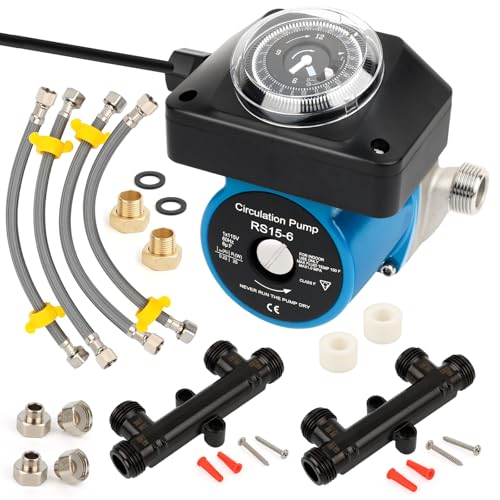
The Rheem branded kit pairs a high efficiency pump with two upgraded brass bypass sensor valves and a 4 line configuration. It is a straightforward tank heater retrofit. You get everything you need in the box, and the brass valves outlast the plastic parts on cheaper kits by years.
Pros
- All brass bypass valves resist corrosion in hard water regions.
- Programmable timer is easy to use, with peak window presets.
- Complete kit means no extra plumbing runs to the hardware store.
Cons
- Basic plumbing skills required. First timers may want a plumber.
- Timer presets sometimes need seasonal tweaks as inlet water temperature swings.
Watts Hot Water Recirculating Pump Kit

This is the budget Watts entry, and it is a fine buy if you already have a Watts 0955805 or Grundfos 595916 style system. Two brass sensor valves, four 3/4 inch NPT supply lines, and a cast iron pump head that runs at roughly 25 dB. It shuts off once the line hits 98 F, and the built in timer schedules peak hours.
Pros
- Compatible with common Watts and Grundfos setups. Retrofit friendly.
- Quiet at about 25 dB. Suitable for a utility closet near living space.
- Timer plus low power draw keeps operating cost minimal.
Cons
- Requires a dedicated 110V outlet close to the pump. Plan the location first.
- Non standard brands may need adapters, which are not included.
How to Choose
Buying the wrong recirculating pump wastes money and creates new plumbing headaches. Match the pump to the house, not the marketing copy. If you have never worked on your own water heater wiring, read up on line vs load GFCI before you touch the outlet the pump will plug into.
- Match GPM to distance. Roughly 2 to 4 GPM handles a small home. 8 to 10 GPM is only needed if the far bathroom is more than 40 feet from the heater.
- Timer or demand control, always. A pump that runs 24/7 wastes energy and shortens the impeller life. A timer or push button demand switch is not a luxury.
- Compatibility with your heater type. Most of these kits are tank only. A tankless heater needs a specific tankless rated pump, or you risk short cycling.
- Bypass valve material. Brass or 304 stainless beats plastic. The valve fails first on cheap kits, usually in the second winter.
- Warranty length. Three years is the sweet spot. One year warranties on sealed pump heads are a red flag.
- Noise rating in dB. Anything at 25 to 30 dB sits below furnace noise. Above 45 dB and you will hear it upstairs at night.
If you also have quiet water features on the same electrical circuit, our best fountain pump guide has notes on which pumps play nicely with a shared timer.
Frequently Asked Questions
How much does a recirculating pump save on my water bill?
A well scheduled pump avoids the 1 to 3 gallons of cold water most households run down the drain per hot water draw. On a family of four that adds up to roughly 12,000 to 15,000 gallons a year. Actual dollar savings depend on your water rate, but 60 to 150 dollars annually is a fair range in most US cities.
Can I install a hot water recirculating pump myself?
Yes, if you can shut off the main, cut a copper or PEX line, and thread a compression fitting. Most of the kits above are marketed as DIY. If you need a dedicated return loop or the pump wires into a hard wired circuit, hire a licensed plumber and pull the permit.
Do I need a return line?
No. Comfort style pumps like the Watts Heat H2O and the VERIWIS use a bypass valve under the farthest sink instead of a dedicated return line. If your house was piped in the 1990s or later without a return loop, the bypass approach saves you a wall tear out.
Will a recirculating pump work with a tankless water heater?
Only if the pump and the heater are both rated for tankless use. Standard kits are built for tank storage heaters. Running the wrong pump on a tankless can cause the heater to short cycle and shorten its life. Read the tankless manual.
How noisy is a recirculating pump in real use?
Most of the units on this list run in the 25 to 35 dB range, quieter than a refrigerator. Older cast iron pumps and pumps mounted directly to studs without isolation can transmit vibration and feel louder. A small rubber gasket between the pump and the mounting surface fixes 80 percent of noise complaints.
How long do these pumps last?
A well maintained sealed pump lasts about 8 to 12 years. The bypass valve is the wear item. Expect to replace a plastic valve every 2 to 4 years and a stainless valve every 6 to 10 years. Ceramic bearing pumps like the 595926 last the longest in my experience.
Related Reading
Bottom Line
The Watts Heat H2O is the best hot water recirculating pump for most homes, hitting the right balance of flow, timer control, and brand support at a reasonable price. If you have a bigger house with a long run to the far bathroom, spend the extra on the VERIWIS kit for its higher GPM and stainless bypass valve. Both preserve pipes, cut waste, and pay back within a couple of years.
Affiliate disclosure: As an Amazon Associate we earn from qualifying purchases at no extra cost to you. Prices and availability are accurate at the time of publication.