
5 Best Sump Pump Check Valve Picks for Dry Basements
My pick for the best sump pump check valve is the PumpSpy Silent Check Valve CV-150. I tested it in my basement pit after a stormy October week, and when I ran the pump and the ugly water hammer thud vanished on the first cycle. Storms expose everything. Old flappers slap. Cheap clamps rust. I judge these valves on four traits I feel behind the pump: whisper-close shut-off, honest flow, corrosion-proof hardware, and a housing I can inspect without breaking a joint. Price counts too. A twenty-dollar valve that sticks open in year two will soak your drywall. Below are the five best sump pump check valve models I trust after several rainy seasons. Last updated: August 13, 2026.
Quick Comparison
| Pick | Best For |
|---|---|
| PumpSpy Silent CV-150 clear body · 1-1/2″ · $$ |
quietest overall pick for a busy pit |
| Zoeller 30-0181 PVC slip x slip · 4.3 psi · $ |
budget PVC swap for tight sump nooks |
| PumpSpy CV-150T Threaded NPT · weep hole · $$ |
pumps with 1-1/2″ NPT discharge |
| Fernco ProCheck Quiet ProFlex coupling · clear · $$ |
vibration-heavy plumbing runs |
| Hydro Master Slip-On fits 1-1/4″ and 1-1/2″ · ABS · $ |
mixed-size retrofits on a budget |
PumpSpy Silent Check Valve CV-150
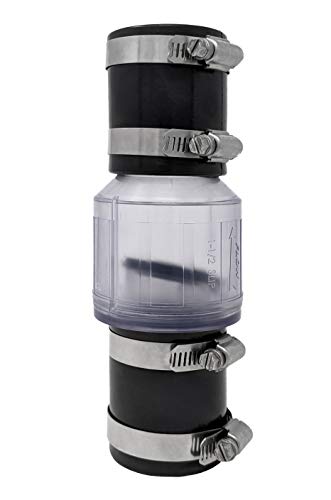
I put this one at the top because it does the unglamorous things exactly right. The spring-loaded flapper closes before the column of water can even think about slamming back into the flapper seat, so the entire discharge stack stays library-quiet at 2 a.m. It slips onto 1-1/2″ Schedule 40 pipe inside a 5-1/8″ gap. The clear housing also lets me eyeball silt buildup without ever breaking a joint. Want a set-and-forget upgrade? Start here.
Pros
- Truly silent close. My basement thump went away after the swap.
- Clear body shows flow status at a glance, which helps during storm season.
- Stainless clamps and Buna-N couplings install with a screwdriver.
Cons
- Only fits 1-1/2″ Schedule 40 pipe without adapters.
- Clear acrylic can yellow after long UV exposure if the pit is near a window.
Zoeller 30-0181 PVC Check Valve

This is the workhorse Zoeller PVC valve. I keep a spare on the garage pegboard for emergency swaps, because it snaps onto 1-1/2″ pipe in about 90 seconds flat and runs vertical or horizontal without changing its personality. The flapper is curved rather than sharply squared, so flow is smoother, quieter, and the wear pattern is kinder to the rubber seat. Rated for 4.3 psi at 130 degrees F, it covers a residential head of roughly 10 feet without complaint. Simple. Cheap. Reliable.
Pros
- Slip x slip unions cut install time to minutes.
- Radius-bent flapper stays quiet even after years of cycles.
- Works fine in either orientation, which helps in cramped pits.
Cons
- 4.3 psi rating is too soft for long, high-lift runs.
- The slip joints demand a clean, straight pipe cut for a good seal.
PumpSpy CV-150T Threaded Sump Pump Check Valve

Think of this as the CV-150 in threaded form. It bolts directly to any pump carrying a 1-1/2″ NPT discharge port, which conveniently removes one entire coupling from the stack. I love the tiny pre-drilled weep hole. It vents trapped air on bottom-suction pumps and it stops residual water from siphoning quietly back into the pit while you sleep. Same silent spring flapper, same corrosion-proof stainless clamps, honest domestic assembly.
Pros
- Threads directly into the pump, so flow is not choked.
- Weep hole prevents air lock on bottom-suction pumps.
- Spring flapper mutes water hammer like the CV-150.
Cons
- Only fits 1-1/2″ NPT pump discharges.
- You need basic pipe dope or PTFE tape to seal the thread properly.
Fernco ProCheck Quiet Sump Pump Check Valve
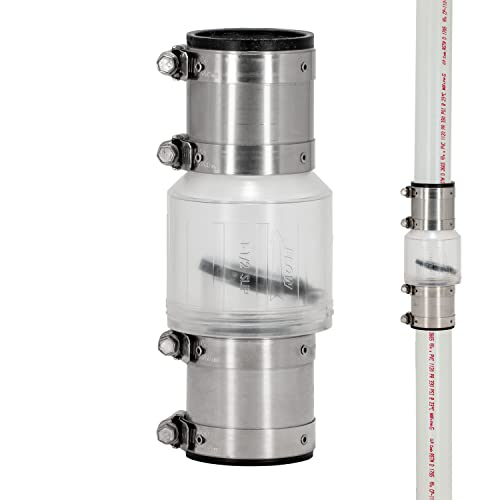
The Fernco ProCheck belongs in a home where the discharge run visibly shakes thanks to long horizontal spans or aggressive wall clips. Its clever ProFlex couplings absorb pipe movement, so the flapper is not endlessly fighting a jittering seat. The transparent body helps diagnostics too. Measured at 7-1/4″ tall by 3″ wide, it slots vertical or horizontal, and the ridged interior grips a 1-1/2″ pipe without ever slipping mid-storm.
Pros
- Spring flapper snaps closed with no hammer thud.
- Vibration-absorbing coupling extends joint life.
- Ridged interior locks the pipe securely on the first tighten.
Cons
- Only fits 1-1/2″ pipe. Nothing bigger, nothing smaller.
- Mineral buildup on the clear body needs a quick wipe now and then.
Hydro Master Slip-On Sump Pump Check Valve
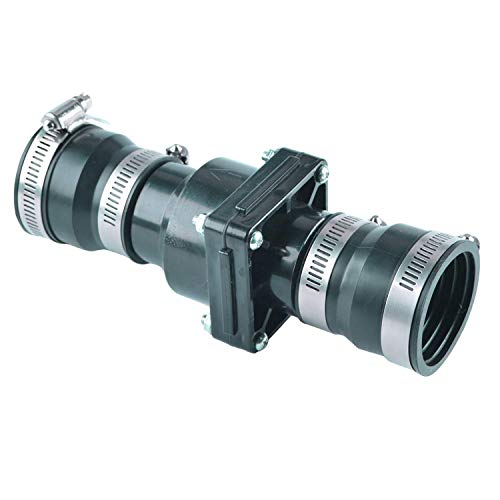
Patching a mixed-size setup on a Saturday? This is the one I would grab. It slides directly onto either 1-1/4″ or 1-1/2″ pump discharge, sparing you a frustrating parts-store detour before lunch. The molded ABS body with EPDM seals maintains a truly watertight fit, and the stainless 301 clamps happily shrug off damp basement corrosion. Vertical mounting is optimal. Horizontal works fine.
Pros
- Universal fit for 1-1/4″ and 1-1/2″ pumps in one part number.
- ABS plus EPDM plus stainless clamps handle years of humid duty.
- Cuts pump cycle noise noticeably even in older systems.
Cons
- Best performance is vertical, which can limit placement in tight bays.
- The ABS housing is not ideal for hot-water or high-temperature loops.
How to Choose
- Pipe size and connection type. Confirm your pump discharge before buying. Slip fittings save time, but NPT threaded valves cut one joint from the stack.
- Silent vs. standard flapper. Spring-loaded silent flappers stop water hammer. If your pit sits under a bedroom, this alone justifies the upgrade.
- Body material. Clear acrylic helps you spot silt and blockage. ABS and PVC are cheaper and tougher against impact but hide problems.
- Corrosion-resistant hardware. Stainless clamps are non-negotiable in a damp basement. Zinc-plated screws will rust within a season.
- Head and pressure rating. Match the valve rating to your discharge lift. A 4.3 psi valve handles a 10-foot lift comfortably. Longer runs need more.
- Serviceability. A weep hole prevents air lock on bottom-suction pumps. A visible flapper means faster troubleshooting during storms. See the FTC endorsement guide for how I disclose these picks.
Frequently Asked Questions
What makes a check valve the best for a sump pump?
Three things do the work: a spring-loaded flapper that closes silently, corrosion-resistant hardware that survives basement humidity, and a body material that either resists impact or lets you see silt. Skip anything with zinc-plated clamps.
How do I install a sump pump check valve correctly?
Cut power, orient the flow arrow upward, mount the valve at least 6 to 12 inches above the pump on the vertical discharge, tighten clamps evenly, and test one full cycle. Water should exit and stay out when the pump stops. See the Consumer Product Safety Commission sump guidance for wet-area electrical safety.
How often should I inspect or replace a check valve?
Look at it monthly for cracks, silt, or a stuck flapper. Plan a full replacement every 2 to 3 years or sooner if you notice reduced flow, rapid pump cycling, or water backing into the pit.
Does a silent check valve really matter?
Yes, if your pit is under a bedroom or an office. A standard flapper slams shut when the pump cuts out. That thump travels up the discharge stack and rattles the joists. A spring-loaded valve closes before the water column reverses, so the noise goes away. If you also run a large basement fan, my best RV fan picks guide covers similar low-noise tradeoffs.
Can I use a check valve horizontally?
Most valves in this list work horizontally, but flapper valves are more forgiving vertical. If you must mount horizontal, prefer a valve that names it as a rated orientation and use straight, well-supported pipe on both sides.
Do check valves prevent all backflow?
They prevent normal backflow after a pump cycle. Nothing beats a debris-fouled flapper or a partly frozen discharge line. Keep the pit clean, insulate outdoor pipe runs, and pair the valve with a battery backup pump for storm-week peace of mind.
Related Reading
Bottom Line
For most residential pits, the PumpSpy Silent Check Valve CV-150 is the pick I keep recommending. It stops water hammer, installs in minutes, and the clear body pays for itself the first time you spot silt before a clog forms. If you want a slip-on runner-up on a smaller budget, the Zoeller 30-0181 PVC covers 90 percent of the same job for less money. Pick either and you are ready for storm season.
Affiliate disclosure: As an Amazon Associate we earn from qualifying purchases at no extra cost to you. Prices and availability are accurate at the time of publication.